
Last updated November 23, 2026
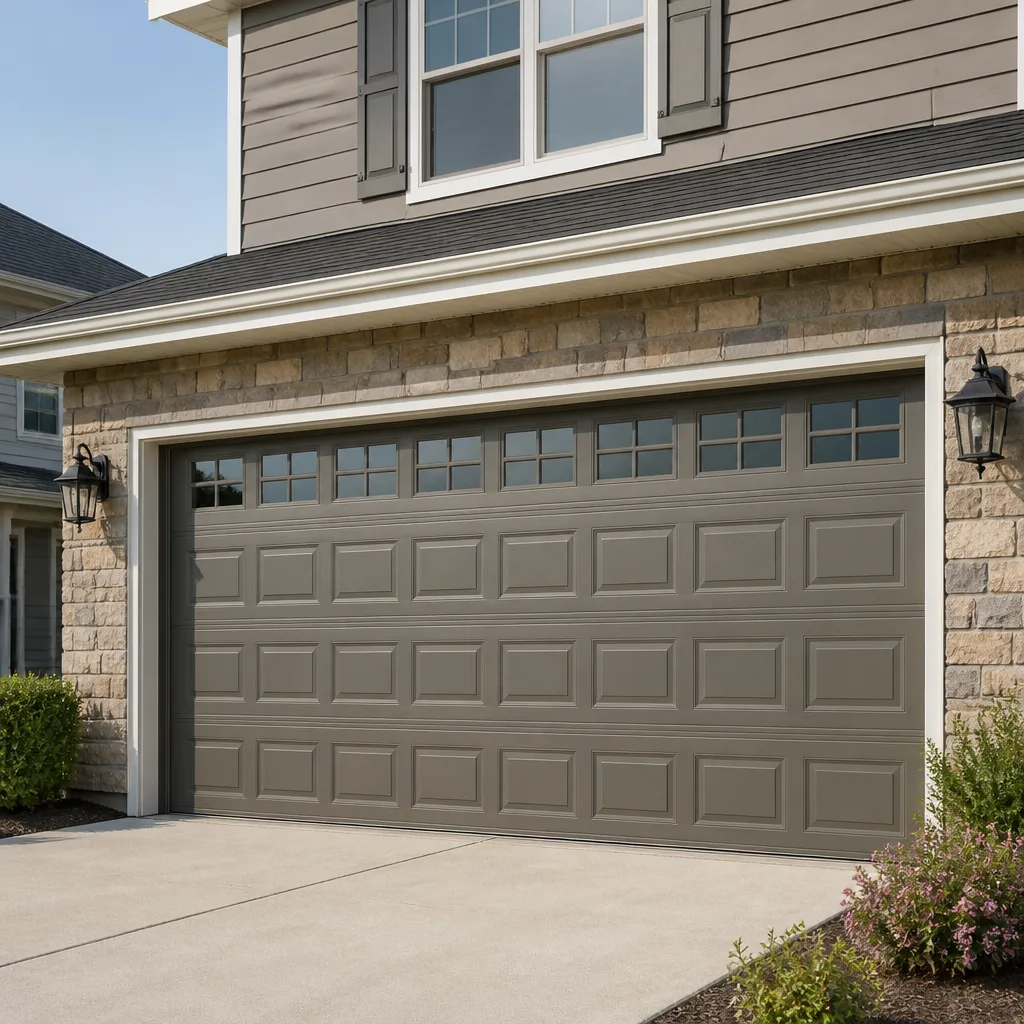 Raised-panel steel
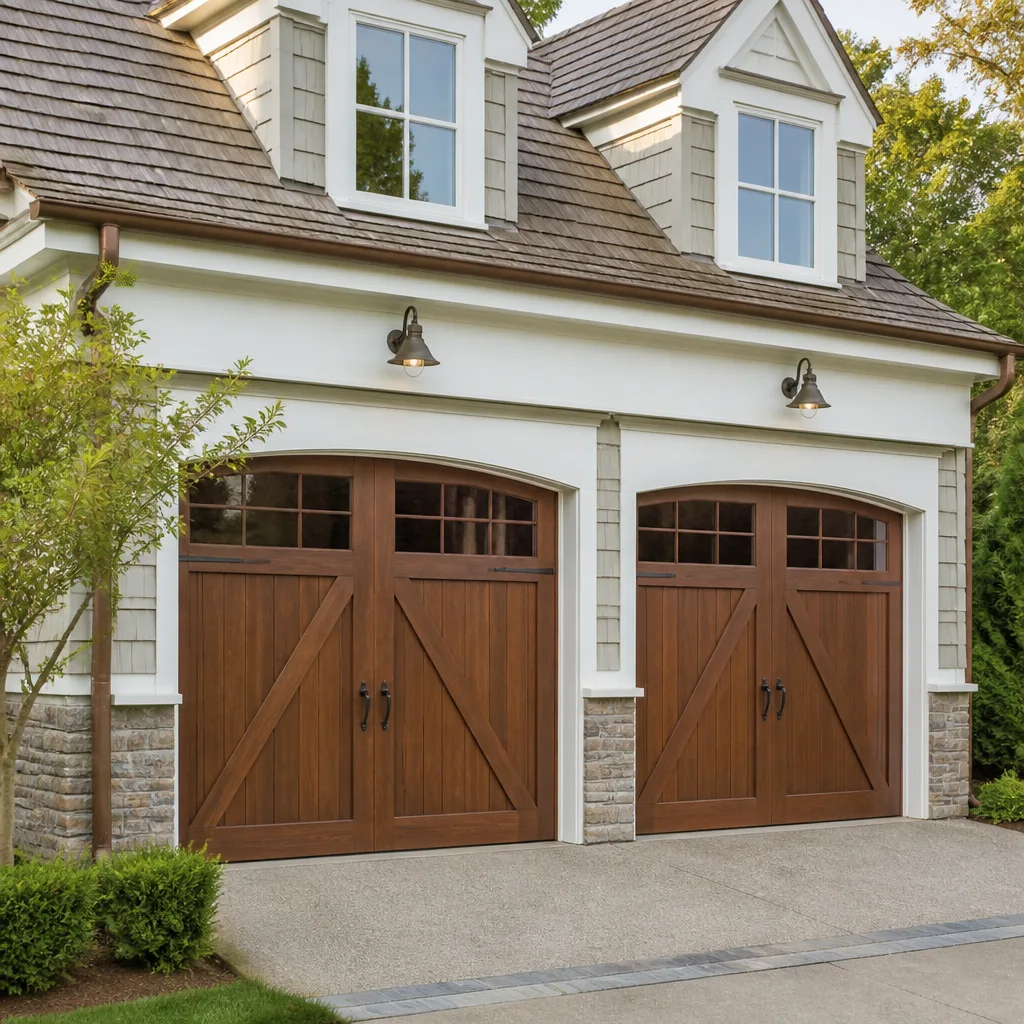 Carriage house
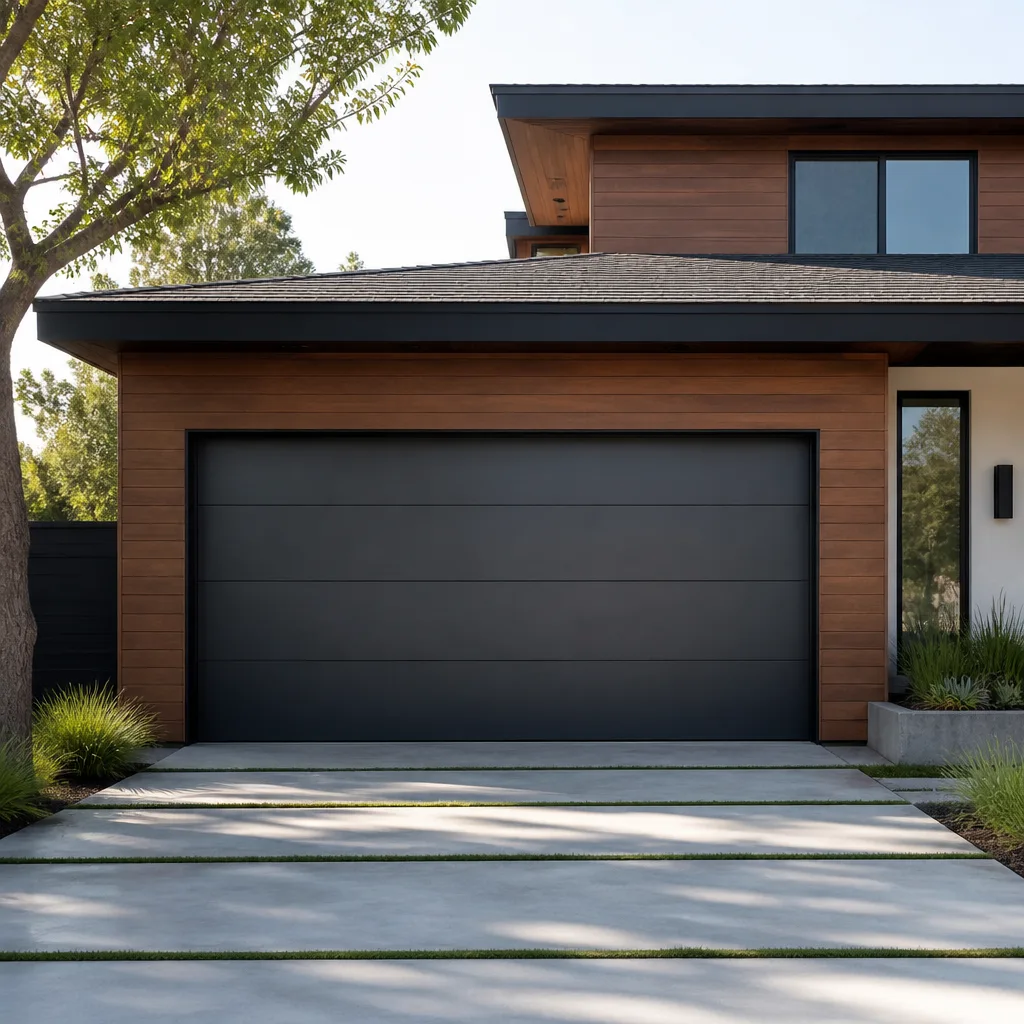 Modern flush
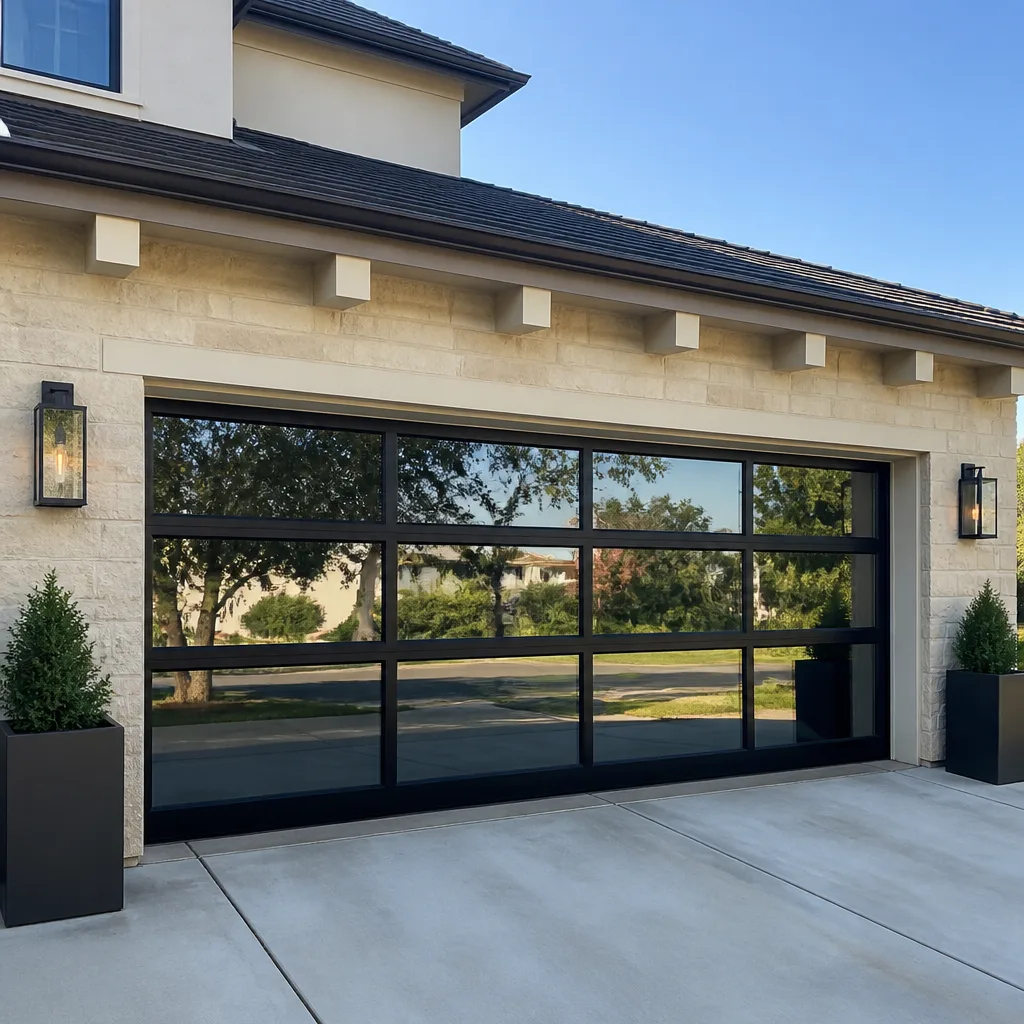 Full-view glass
 LiftMaster openers
 Chamberlain openers
Full 25-point door and opener safety check with every visit - springs, cables, rollers, tracks, and your LiftMaster or Chamberlain opener included
You get a price before we start. It does not change when the pro arrives.
Get your free estimateSeasonal Garage Door Care for White Plains: Year-Round Homeowner’s Guide
Ask most homeowners in White Plains which season is hardest on a garage door and they’ll say winter. That’s the intuitive answer, and it’s wrong. The damage usually happens in March, during the thaw. Ice that has worked its way into the bottom seal and the panel joints melts, refreezes overnight, then melts again. That cycle pries the threshold seal loose and pushes water up into the seams where the panels meet, and by the time you notice a soft spot or a draft, the freeze-thaw has been at it for weeks. This guide treats each White Plains season as its own engineering problem, because each one attacks a different part of the door and opener system.
Quick Answer
Year-round garage door care in White Plains means matching maintenance to the season: inspect seals and panel joints during the spring thaw, watch for humidity swelling in summer, run the full pre-winter sequence in fall, and treat a heavy-feeling door in winter as a spring problem rather than a lubrication problem. Two tasks – lubricating the moving metal parts and testing the safety reverse – belong on the calendar every season, no exceptions. Everything else shifts with the weather.
Styles & brands we work with
- Raised-panel steel
- Carriage house
- Modern flush
- Full-view glass
- LiftMaster openers
- Chamberlain openers
Table of Contents
- Spring in White Plains: What the Freeze-Thaw Cycle Does
- Summer Humidity and the Sensors
- The Fall Pre-Winter Sequence (Order Matters)
- Winter: Cold Metal and the Heavy Door Feeling
- The Two Tasks That Never Skip a Season
- A Neighborhood-by-Neighborhood Look at Local Conditions
- Common Mistakes to Avoid
- When to Call a Professional
Spring in White Plains: What the Freeze-Thaw Cycle Does
Westchester County winters don’t just get cold; they oscillate. A week of nights in the teens followed by daytime highs above freezing is normal here, and that repeated expansion and contraction is what breaks things. Water is the mechanism. It gets into a gap as liquid, freezes and expands in the gap, and then widens that gap a fraction each time it happens. By the time spring arrives, the damage is already done.
The bottom (threshold) seal takes the worst of it. It sits in contact with concrete that holds meltwater, so it’s wet long after the driveway has dried. When ice forms around the seal’s lip, the seal can tear away from the aluminum retainer or deform permanently, and a deformed seal leaves a gap under the door that water and cold air both use. Panel joints are second on the list. On a multi-panel door, water trapped in the horizontal seams between sections can begin to corrode steel and lift paint. That’s cosmetic in April and a structural problem by the following spring if the exposed metal keeps wetting and freezing.
Spring is also when you’ll first notice your garage door repair list getting longer, because the failures that started in February become visible once the ice clears. Our technicians have up to 9 years of experience, and the most common spring call we see is a door that suddenly won’t close flush, which usually traces back to a seal that was compromised months earlier.
What spring care actually looks like, in order:
- Walk the threshold seal from one side to the other. Look for tears, flat spots, or a seal that has pulled out of its channel. Press it with your thumb: it should feel springy, not hard and glossy.
- Look at the panel seams against the light. Close the door and check from inside the garage with a flashlight aimed at the seams. Any rust bloom or lifted paint is where water is sitting.
- Clear the weep holes. Most steel doors have small drain holes along the bottom edge. If they’re clogged with grit, water has nowhere to go and it’ll find the seams.
- Check the door’s balance manually. Disconnect the opener and lift the door halfway. It should stay put. If it drifts down, the springs are tired and need attention. Never adjust the springs yourself; that’s a trained-hands job covered below.
- Clear the tracks of winter grit. Sand, road grit, and small debris get packed into the track channels overwinter. Wipe them out with a rag, don’t lubricate the tracks themselves.
Summer Humidity and the Sensors
White Plains summers are humid enough that a wooden garage door behaves like a different object in July than it did in January. Wood absorbs moisture from the air, and a wood door will swell – sometimes enough that a door that closed perfectly in winter binds in the frame by August. That’s not a defect and it’s not a reason to force the operator to push through it. It’s a reason to check that the door still operates freely and that any moisture-related binding gets addressed where it starts.
If you have a wooden door, the corrective measure is a good exterior-grade paint or stain on all six sides of every panel, not just the visible face. The top and bottom edges of each section are where moisture gets in and where a paint job usually stops short. A sealed wood door resists swelling and cracking; an unsealed one doesn’t, and no amount of operator adjustment will fix it.
The other summer issue is completely different: the safety photo-eye sensors. These are the small lenses mounted near the floor on either side of the door opening. The system works by one eye shooting an invisible beam across the opening to the other. If anything interrupts that beam – dirt, cobwebs, a bag of mulch, a ball that rolled against the lens – the door won’t close, or it closes a foot and reverses. In heat, the problem shows up more often, for two reasons. First, sun exposure and UV can cloud or haze older lenses over time, so the beam gets weaker in summer. Second, plenty of homeowners move things around the garage in fine weather and plant something in the path of the beam without realizing it.
So if a door on a Genie or LiftMaster system keeps reversing in the summer, the sensor is the first place to look, not the opener logic board. Wipe both lenses with a clean rag, check that they’re pointed at each other and that the indicator light on each is steady rather than flickering. On a Wayne Dalton door with the older torsion setup you may also notice the door sounding rougher in July – that’s usually the rollers and hinges telling you it’s time for lubrication, not the opener failing. Our garage door opener repair work starts with exactly this kind of diagnosis, because the opener is rarely the first thing that goes wrong.
The Fall Pre-Winter Sequence (Order Matters)
Fall is the season when most homeowners do their garage door maintenance in a single afternoon. The problem is that most of them do the tasks in the wrong order, so each step partially undoes the one before it. Sequence matters because the goal of the fall pass is to get the door ready to survive freezing temperatures, and the tasks build on each other.
Here’s the order that actually works. Do them in this sequence, and don’t skip ahead:
- Wash the door first, including the bottom edge. You can’t inspect what you can’t see. Cleaning removes the grit that would otherwise hide cracks, loose paint, or seal damage, and it prevents debris from working into the newly lubricated parts.
- Inspect and replace the weather seals and the bottom threshold seal. Do this before winter, because a seal that’s already compromised will fail outright at the first hard freeze. A new threshold seal lasts through the ice and keeps meltwater from getting under the door in the first place.
- Touch up paint on any bare metal or wood. Bare metal rusts fast in a White Plains winter; winter road treatment that gets tracked into the garage accelerates it. Paint needs a few mild days to cure properly, so it has to happen before the cold sets in.
- Lubricate hinges, rollers, and the torsion spring coils with a garage-door-specific lubricant. Pay attention to the last point. A light, purpose-made spray holds up in cold weather; household oil or grease thickens at low temperatures and can make the door heavy in January.
- Test the balance and the safety reverse. Do the balance check before the cold arrives, so any spring weakness shows up while the weather still allows a repair without waiting. Test the reverse by placing a small object in the door’s path.
- Clear the tracks and tighten the brackets. A door that goes into winter with a loose bracket will vibrate itself loose faster once the metal contracts in cold.
One more fall job: make sure the insulation and weatherstripping around the door frame are intact. A colder garage costs more to heat in winter and, more importantly, lets cold air reach the door components from the side. You’ll find your 203-track or a look at your specific door’s edge a good place to start noticing drafts.
Winter: Cold Metal and the Heavy Door Feeling
Here’s the winter fact most guides get wrong: as temperatures drop, torsion springs (the coiled springs above the door that do the lifting work) don’t lose strength in a linear way. Spring steel that’s been tensioned and released over many cycles at moderate temperatures becomes less effective in the cold, and a spring that was borderline in October can feel like it’s failing in January. The door will feel “heavy” – it comes up slowly, or the opener has to work harder to lift it, or it doesn’t stay fully open when you disconnect the opener.
That heaviness is a spring warning, not a lubrication problem. If a homeowner’s first move is to grease everything and crank the opener’s force setting, the door will still be heavy and now the opener is pulling beyond what it was designed to lift. Do the lubrication first (it helps a lot in cold, so it’s worth doing), but then check the balance. If the door still won’t stay halfway open, or if you notice the spring coils have a gap in them or look stretched compared to before, that’s a call for garage door spring repair.
This is where we have to be blunt, and we say it out loud to customers before they ask. Garage door torsion springs are under enormous tension. They can release that energy suddenly and without warning, and a DIY adjustment or repair on them is a genuinely dangerous thing to attempt. People get seriously hurt doing it. This isn’t a scare tactic; it’s the single most common reason we tell homeowners to leave the springs alone. The springs are a trained-hands job, full stop. Our technicians have up to 9 years of experience working with them; that’s the kind of familiarity spring work requires.
Winter also brings the other thing: the door that won’t open, won’t close, or won’t secure. Cold can bind a door in its tracks as metal and rubber contract. When it happens and you can’t wait, we answer 24/7 and offer fast dispatch from 7am to 7pm, Sunday through Friday. A call outside those dispatch hours gets booked into the next opening.
The Two Tasks That Never Skip a Season
Two maintenance jobs have to happen in every season, regardless of what the weather is doing, and skipping them during a mild stretch is always a false economy. The first is lubrication. The moving metal parts – hinges, rollers, and the torsion spring coils – need garage-door-specific lubricant at every change of season. It’s tempting to skip in a dry fall or a mild spring when the door sounds fine, but lubrication is what defends the metal against wear and corrosion; corrosion happens whether or not you’re thinking about it, and it moves fastest when there’s a freeze-thaw cycle and tracked-in road material working into the parts.
The second is the safety reverse test. Every garage door has a safety reverse, part of the opener’s safety system, designed to stop and reverse the door if it meets resistance. Every opener made for the last few decades has one, and it needs to be tested regularly, not once a year. The test takes about a minute: put a small object in the door’s path and confirm the door reverses when it touches it. Do this every season, including the mild stretch. The reason it matters: a safety reverse that’s drifted out of adjustment from months of normal use won’t announce itself, and you’ll only find out it failed at the moment you need it. It’s also the one check that protects the people and pets in your household, which is why we never treat it as optional.
On a Clopay or Amarr door, the balance and safety test both matter year-round, because a door that’s out of balance puts extra stress on a safety system that has to be responsive. If you can’t remember the last time you did either task, today is the day.
A Neighborhood-by-Neighborhood Look at Local Conditions
White Plains isn’t one climate, really; it’s a small city with a variety of micro-conditions, and they shift between neighborhoods. Here’s what we’ve seen matter in specific parts of town. The neighborhoods with older homes and mature trees – the area around Battle Hill, for instance – get more debris in the tracks as a matter of course, so their spring and fall clear-outs matter more. Over in the Highlands and Chatterton sections, where the terrain rolls and the garages often sit into a slope, water management around the threshold is a bigger deal; meltwater pools at the bottom of a sloped garage and the seal has to survive standing water, not just splash. Over by the White Plains Metro-North station and the downtown blocks, garage doors are often on mixed-use and older commercial buildings, where the hardware may be a Genie installation from years back, and humidity control inside the structure matters more than the outside weather. Out toward West Harrison and the stretch along Mamaroneck Avenue, cars come and go through road treatment in winter, and that tracked-in material is exactly what grinds away at door hardware if it isn’t cleaned out.
The upshot: a maintenance schedule that fits a garage in one part of White Plains doesn’t necessarily fit one a few blocks away. That’s a reason to know your own conditions and adapt, not a reason to buy a generic checklist and trust it blindly.
Common Mistakes to Avoid
- Assuming winter is the hard season. The freeze-thaw cycle in March is what actually breaks seals and panel joints, not the cold itself. Inspect after the thaw, not just before the cold.
- Lubricating the tracks. The vertical tracks guide the door; lubricant in the tracks attracts grit and makes the door worse. Lubricate the hinges, rollers, and spring, not the guide rails.
- Forcing a heavy door with the opener’s force setting. Cranking the force to push a binding door is treating a symptom. If a White Plains door is heavy in January, the likely cause is a tired spring, and the forced opener just accelerates wear.
- Skipping the quarter-hour seal check because the door looks fine. A compromised threshold seal is invisible from the outside of the door; it’s only visible from the inside, against the light, or underfoot.
- Painting over a compromised seal instead of replacing it. Paint doesn’t restore a torn seal; it just comes off the first time the ice gets into it.
- Waiting for the door to fail instead of the fall sequence. A fall pass done in the right order prevents most winter failures; a spring repair after the fact costs more in money and inconvenience.
- Trying to adjust torsion springs yourself. The risk is serious injury, not just a botched job. This is the one task in the whole guide we won’t walk you through beyond a visual check.
When to Call a Professional
Some jobs are a homeowner’s for life; some belong to a trained technician. Call for help when the door won’t stay halfway open (a spring problem), when the bottom seal is torn or the panel seams show rust bloom (a seal and repair problem), when the door reverses for no obvious reason after you’ve cleaned the sensors, when the opener motor runs but the door doesn’t move, when the door visibly sags or comes off its track, and when a winter freeze has bound a door you can’t safely operate. Spring repair, in particular, is not a DIY job. White Plains Garage Door Repair Pros offers free estimates in White Plains, all quoted and agreed before any work starts, and we work on LiftMaster, Chamberlain, Genie, Clopay, Amarr, Wayne Dalton, Craftsman, and Raynor systems. Call (844) 685-3329. We answer 24/7. Fast dispatch from 7am to 7pm, Sunday through Friday.
See the difference
 Before
 After
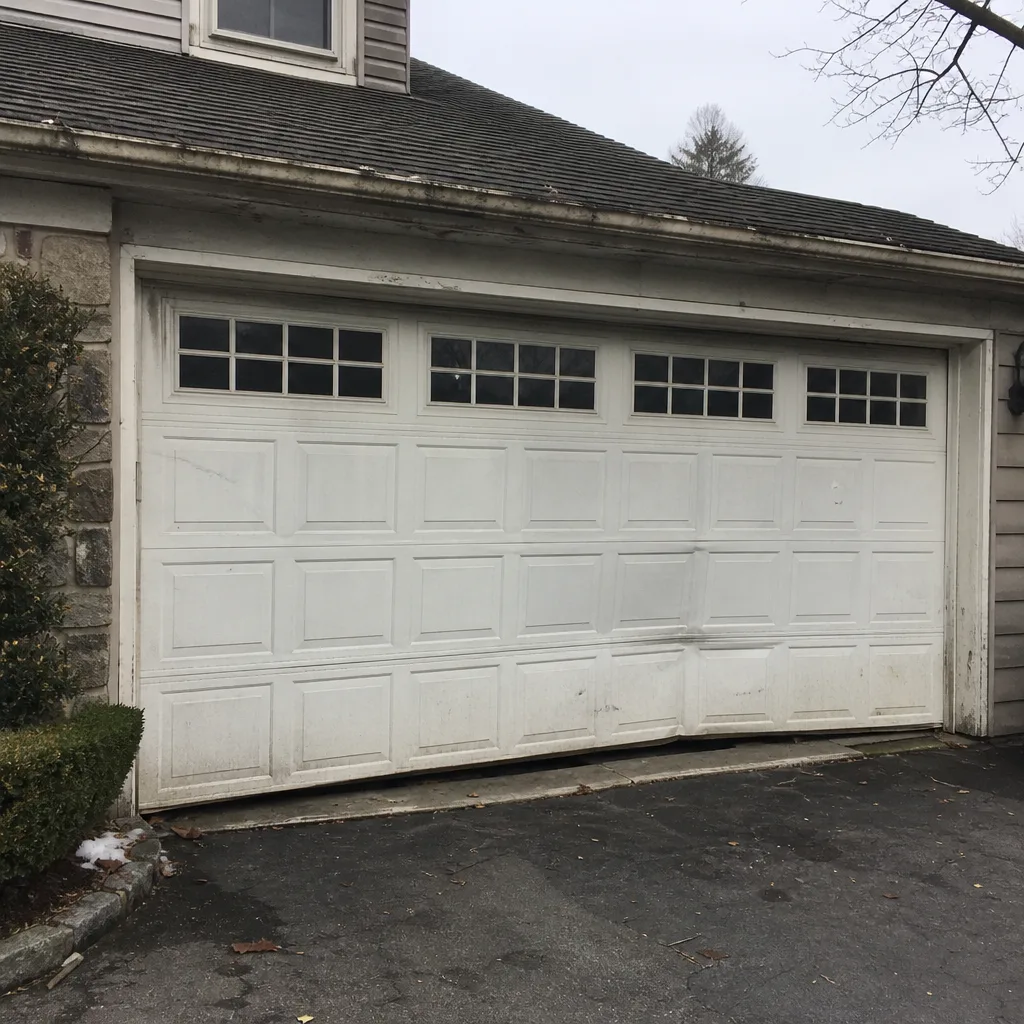 Before
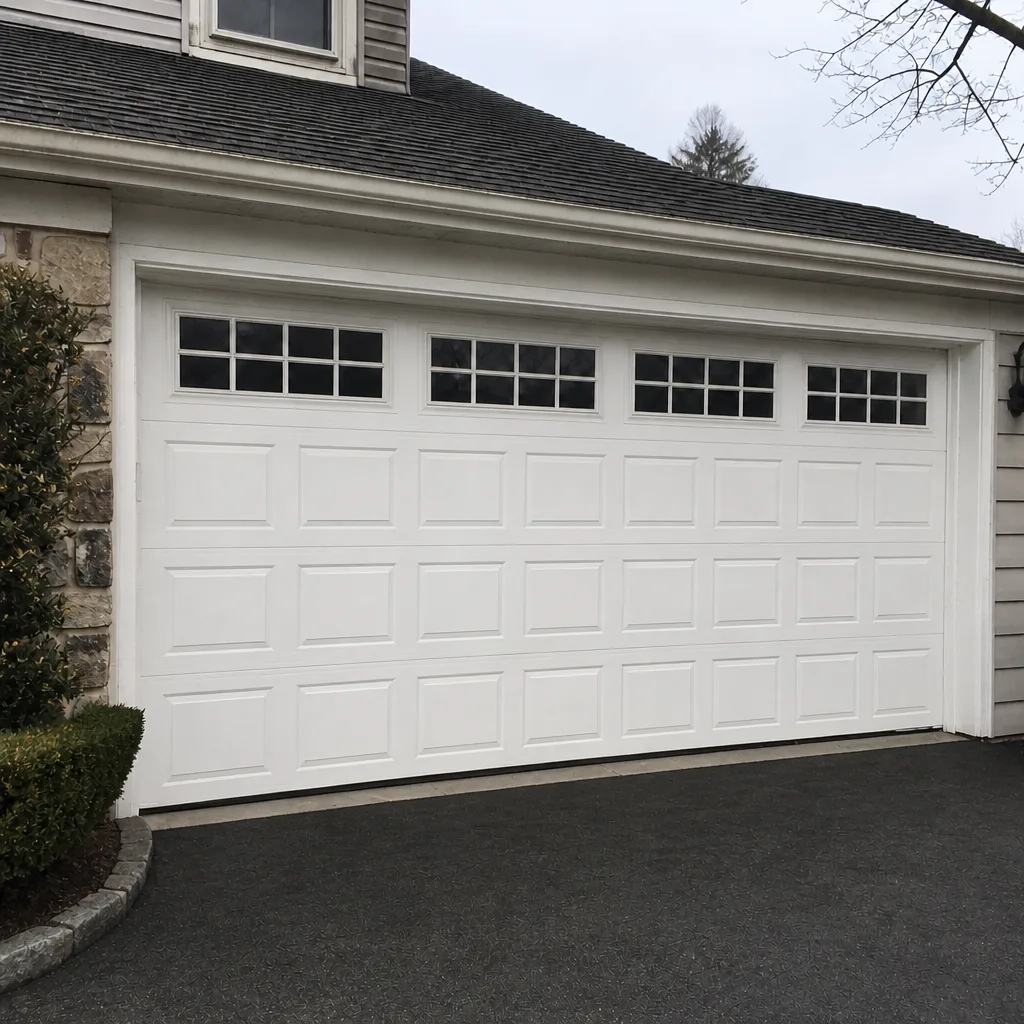 After
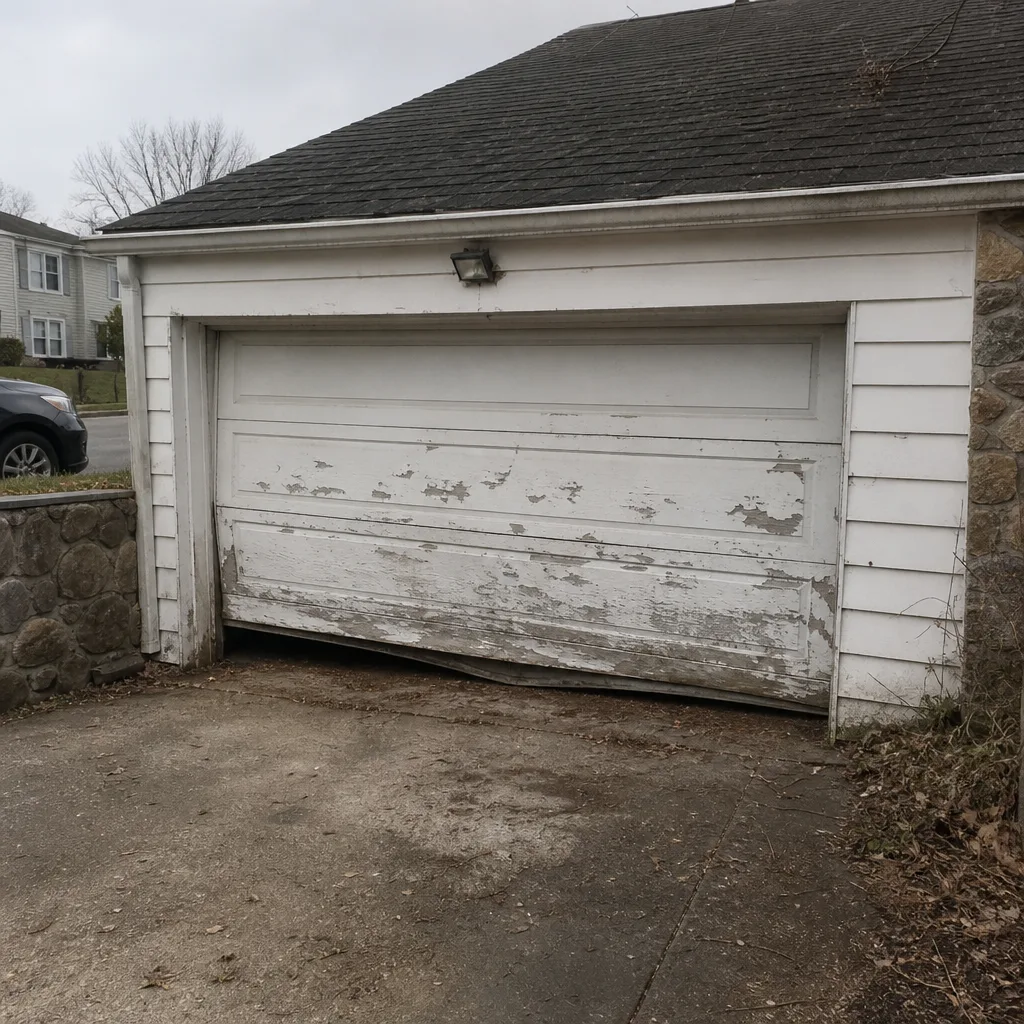 Before
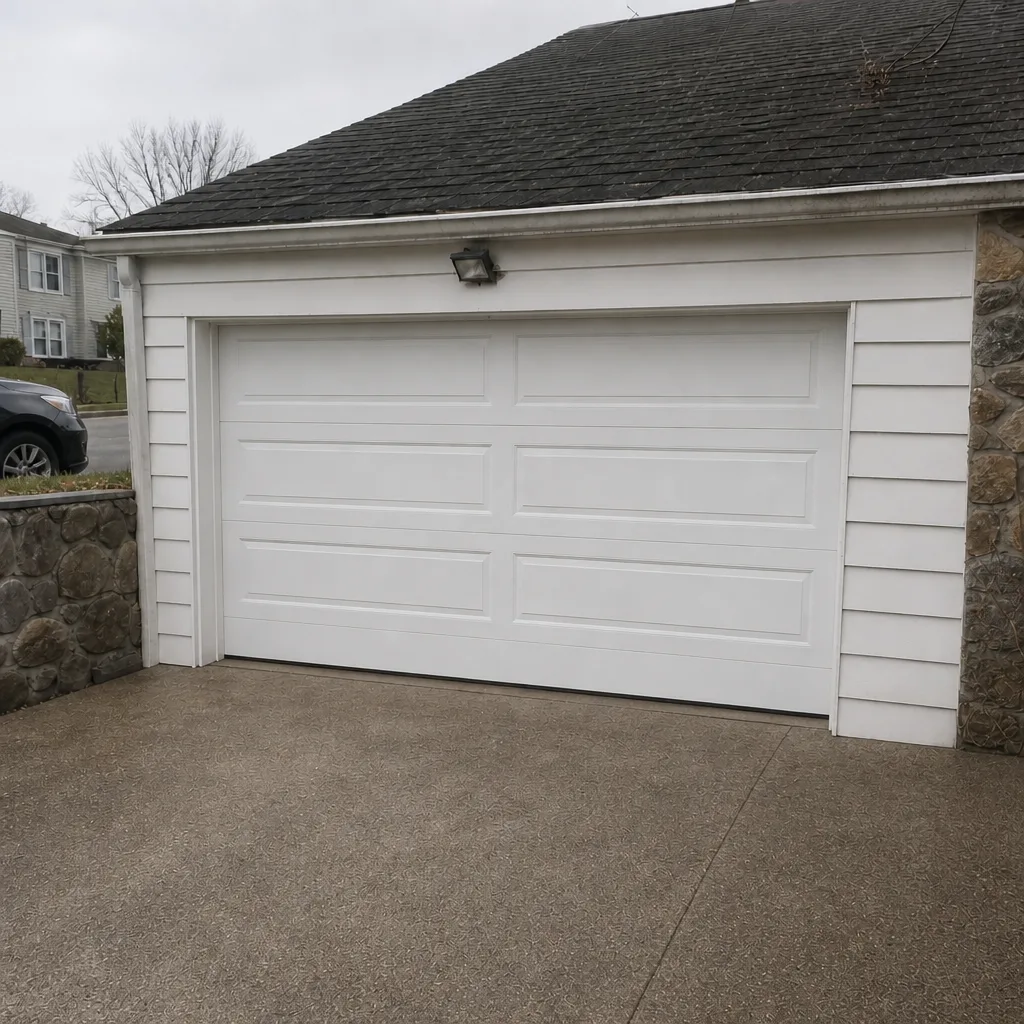 After
Frequently Asked Questions
Four times a year, at each change of season, plus a balance and safety reverse check at every season. The reason White Plains needs four passes rather than two is the climate: the freeze-thaw cycle, summer humidity, and road material tracked into the garage all hit the door on different schedules. Our garage door spring repair and service work starts with a free estimate, and the price is quoted and agreed before any work begins. Call (844) 685-3329 for an exact quote – estimates are free.
It feels heavy because the torsion spring loses some of its lifting effectiveness in cold weather, so the opener and the spring are doing more work than they did in October. That’s normal to a point, but if the door won’t stay halfway open when you disconnect the opener, the spring is tired or failing and needs a trained technician. Don’t turn up the opener’s force to compensate; that’s the wrong fix.
Spring, specifically the thaw, because water that froze into the seals and panel joints all winter is released and refreezes repeatedly as temperatures oscillate. That cycle pries the threshold seal loose and works water into the seams. Check the bottom seal and the inside of the panel joints every March, not just in fall before winter. If you find seal damage, our team at White Plains Garage Door Repair Pros can take a look and give you a free quote – the written estimate sets the final price.
The safety sensors are usually the cause, not the opener. Sun exposure can haze older lenses, and seasonal clutter or new plants can interrupt the beam between the two eyes. Wipe both lenses, confirm each indicator light is steady, and check nothing is in the door’s path. If it still reverses, that’s a sensor alignment or wiring issue and worth a professional look.
Yes, and you should if the existing finish is worn. Bare metal rusts quickly in a White Plains winter, especially with road treatment tracked into the garage. Paint all six sides of every panel – top and bottom edges included, because that’s where moisture gets in – and do it in fall while the weather is mild enough for the paint to cure. A Clopay or Amarr steel door with a good finish will get through winter far better than one with exposed metal.
The local professional we connect you with is licensed and insured as their state requires, and our technicians have up to 9 years of experience. The price won’t change once you’ve agreed to the written estimate; the written estimate sets the final price. Call (844) 685-3329 for a free estimate, and know that the work is quoted and agreed before anything starts.
No. Garage door torsion springs are under extreme tension and can release suddenly, so a DIY adjustment is genuinely dangerous. Leave spring work to a trained technician and stick to the visual checks in this guide. For a free estimate on spring work, call (844) 685-3329; estimates are free.
The Bottom Line
A White Plains garage door’s hard season is the March thaw, not December. Spring care is about seals and panel joints; summer care is about humidity and sensors; fall care is about the pre-winter sequence done in the right order; winter care is about reading a heavy door as a spring warning rather than a lubrication problem. The two constants are lubrication and the safety reverse test, every season, even the mild ones. Do those, match the rest to the season, and a door lasts better through all four. If you need a hand, White Plains Garage Door Repair Pros offers free estimates – call (844) 685-3329 and we’ll take it from there.
Related Reading
Written by the team at White Plains Garage Door Repair Pros.