
Last updated November 23, 2026
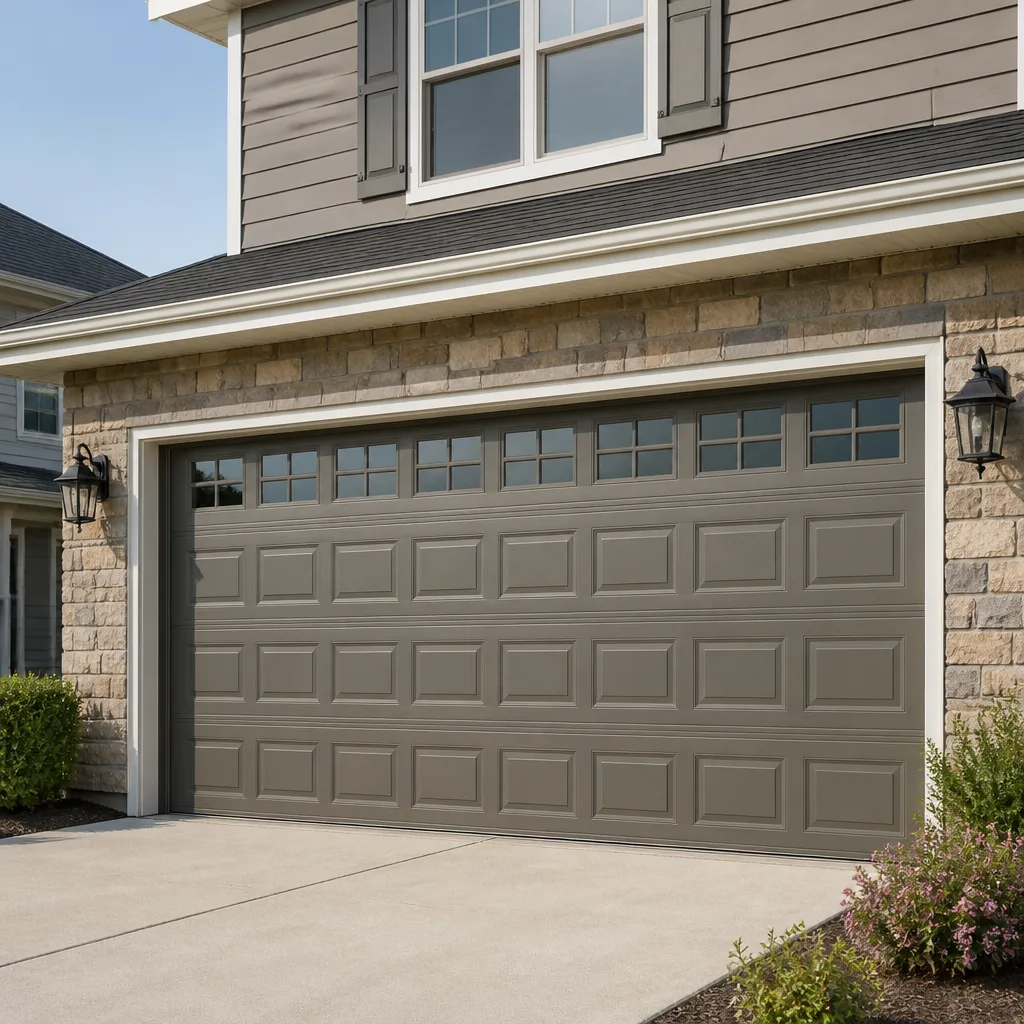 Raised-panel steel
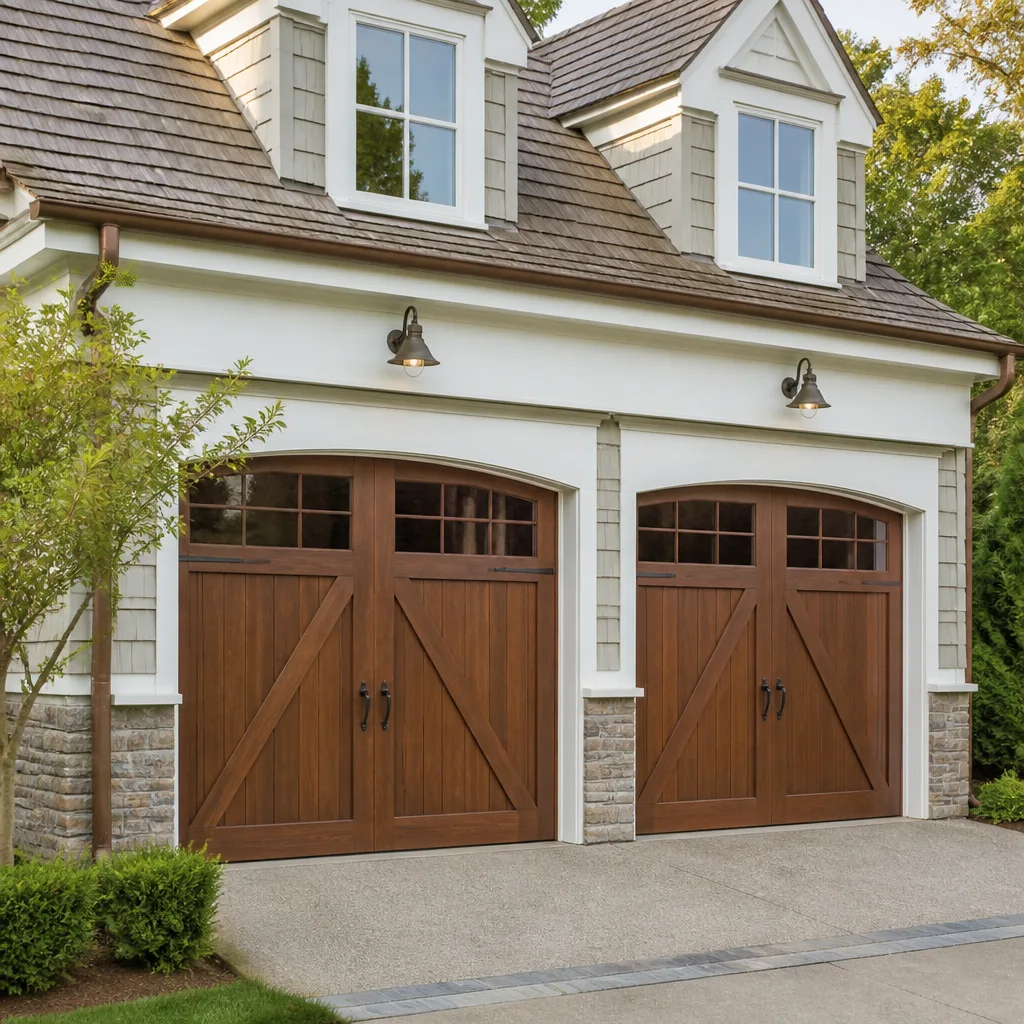 Carriage house
 Modern flush
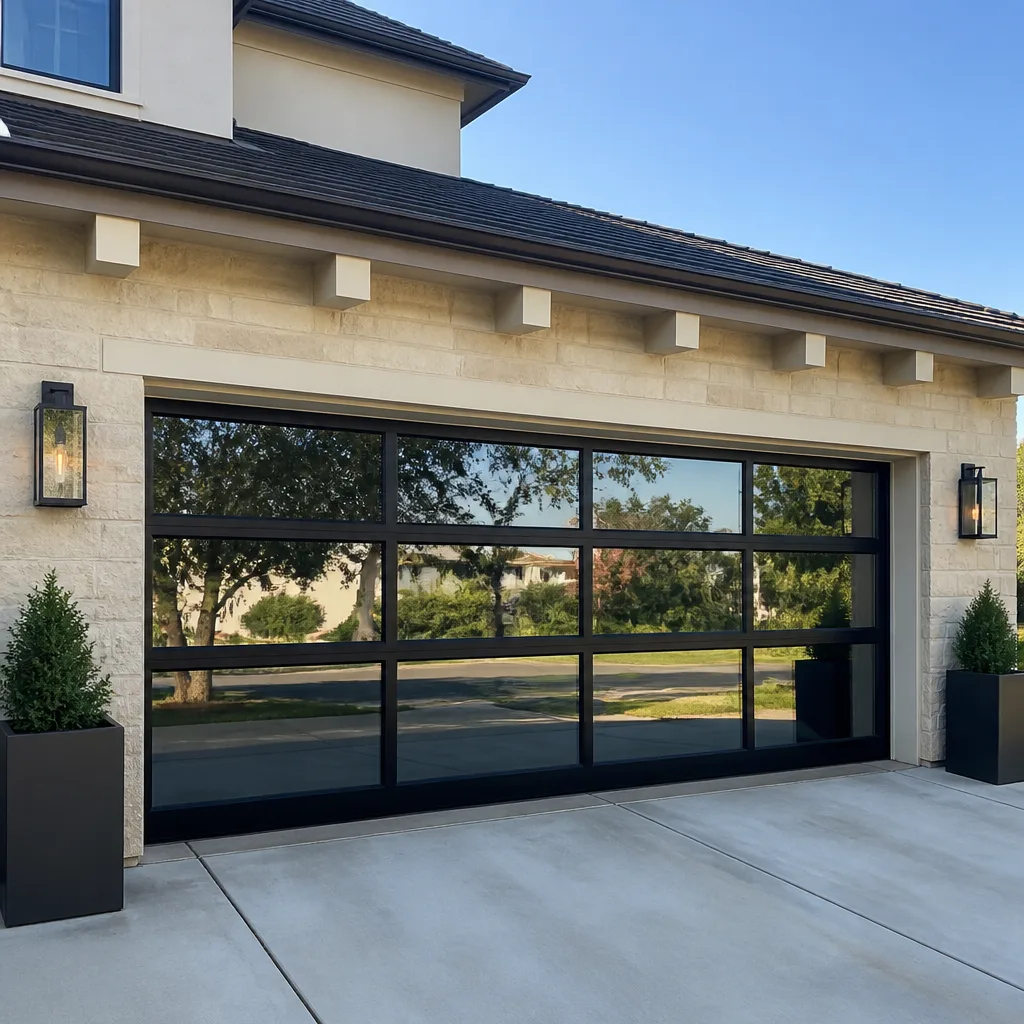 Full-view glass
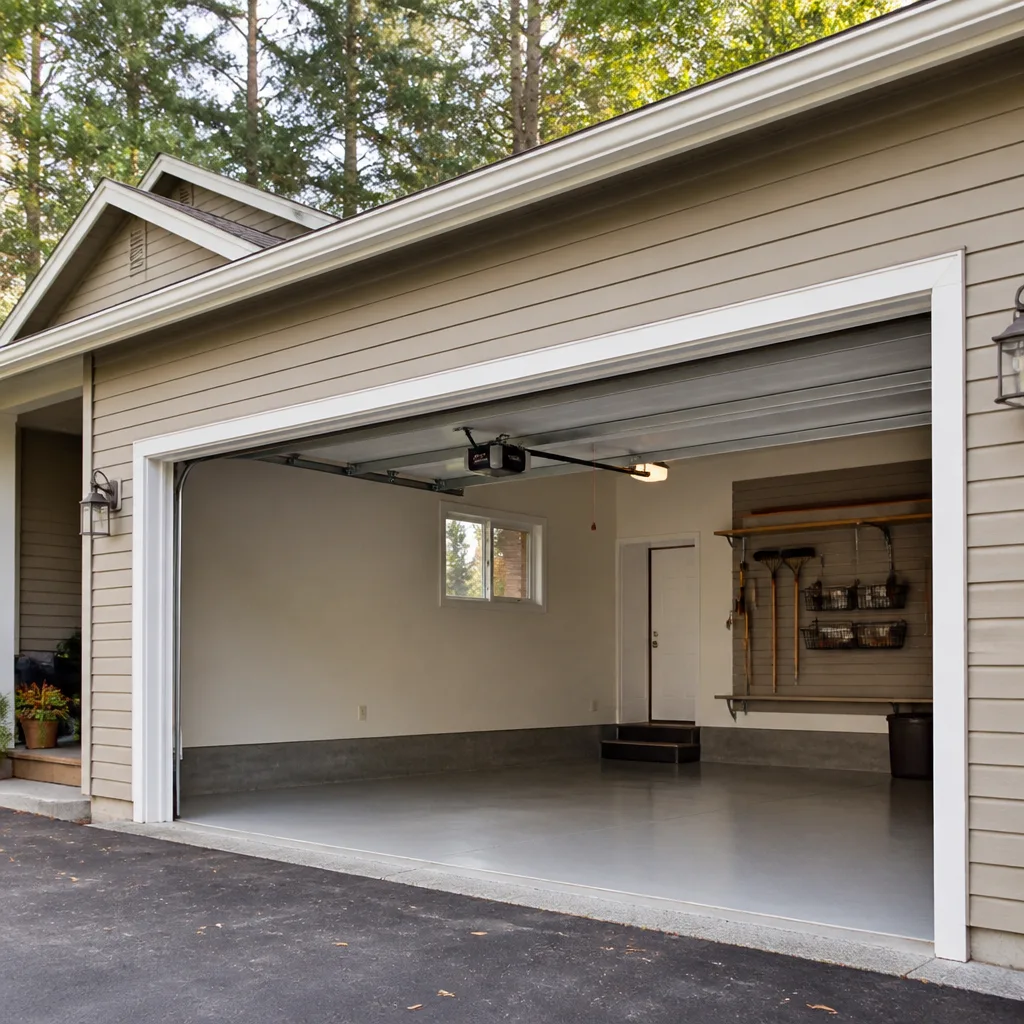 LiftMaster openers
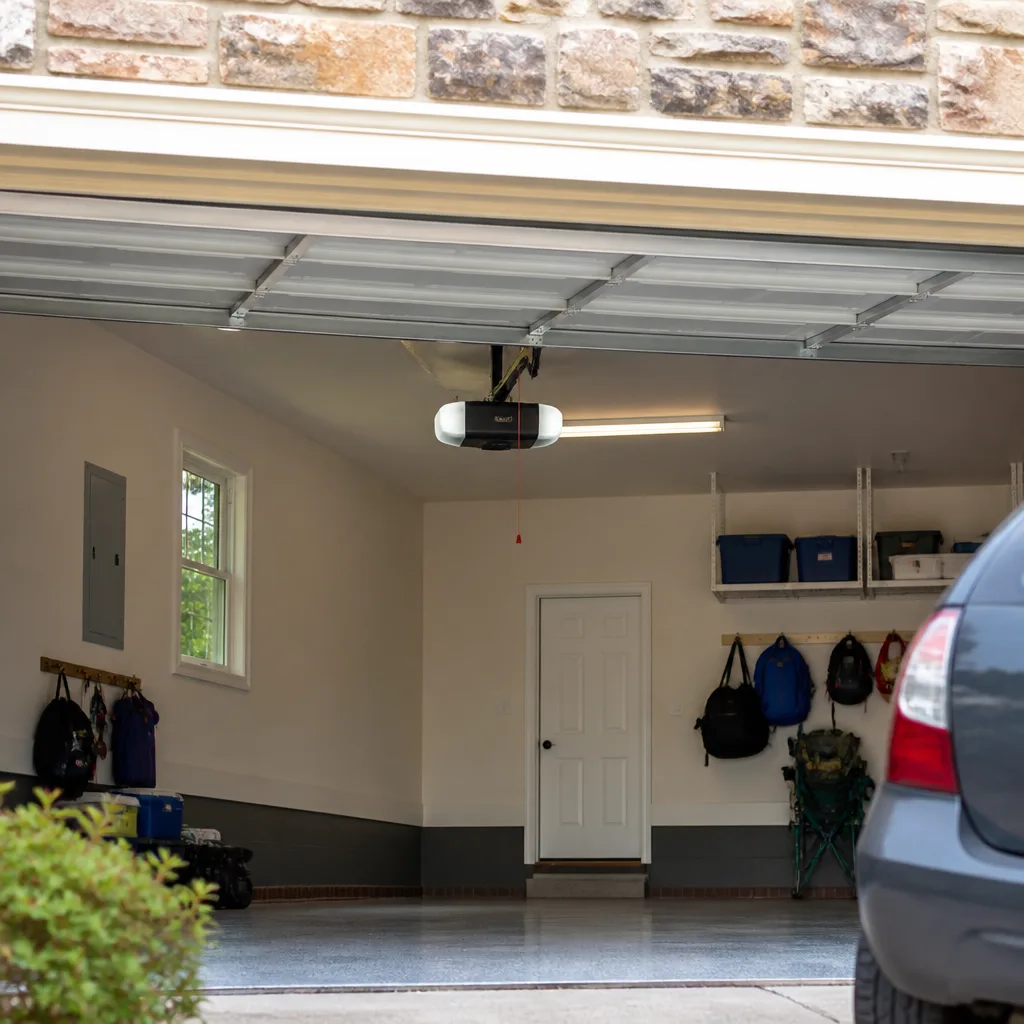 Chamberlain openers
Full 25-point door and opener safety check with every visit - springs, cables, rollers, tracks, and your LiftMaster or Chamberlain opener included
You get a price before we start. It does not change when the pro arrives.
Get your free estimateDIY vs Professional Garage Door: The White Plains Homeowner’s Decision Guide
A torsion spring stores roughly the same energy as a loaded firearm. That’s not a scare tactic – it’s a calibration point. When a garage door won’t open, the honest question isn’t “How hard could it be?” It’s “Where’s the line between a repair I can safely handle and a component that can hurt me?” Most garage door content dodges that line, treating every job as either obviously easy or mysteriously dangerous. We think the line is clearer than that, and it’s worth drawing precisely. In this guide we’ll break the trade down task by task, run the real math on DIY spring replacement, and show you what actually happens when a White Plains homeowner decides to call a specialist.
Quick Answer
Weatherstripping, sensor alignment, track bolt tightening, and lubrication are genuinely safe for a careful homeowner to handle. Torsion and extension springs, lift cables, and bottom bracket bolts are not – those components sit under enough tension to cause serious injury, and no YouTube tutorial changes that. Everything else falls in a middle band where you can diagnose the problem but should let a trained technician execute the fix.
Styles & brands we work with
- Raised-panel steel
- Carriage house
- Modern flush
- Full-view glass
- LiftMaster openers
- Chamberlain openers
Table of Contents
- Where the Line Actually Is
- Tasks That Are Genuinely DIY-Appropriate
- Tasks That Are Never DIY: Springs, Cables, and Brackets
- The Real Cost Math for DIY Spring Replacement
- What White Plains Homeowners Try From YouTube That Technicians Then Fix
- The Middle Ground: Diagnose, Don’t Execute
- What to Do in the Two Hours Before a Technician Arrives
- Why White Plains Weather Shapes the Answer
Where the Line Actually Is
Garage door repairs divide cleanly along a single question: is the component under stored energy, or isn’t it? Springs, cables, and bottom brackets hold the door’s weight and store force. Weatherstripping, sensors, and hinges don’t. That distinction is the whole game, and it’s what the trade itself is built around.
When a trained technician opens a door assembly, they’re evaluating tension, balance, and alignment, not just the broken part. A door that looks fine but is out of balance puts extra load on the opener, and that load shows up weeks later as a burned-out motor. The same logic applies to every other piece.
White Plains housing stock is a factor here. Plenty of homes around the Highlands and North Broadway neighborhoods have older sectional doors with original hardware, some dating to a different era of manufacturing. Older springs and worn rollers behave differently than new ones, and a homeowner working on an unfamiliar vintage setup is working with less margin than someone in a newer build.
The Three Ranges of Risk
- Low risk: Parts that sit at the door’s surface and handle no stored energy – weatherstripping, sensors, hinges, rollers, bolts, lubrication.
- Elevated risk: Adjustments that touch the mechanical system indirectly – track alignment, opener travel limits, balance testing. Diagnosable by the homeowner, risky to execute poorly.
- High risk: Anything holding or releasing stored tension – springs, cables, bottom brackets, winding bars. Never a homeowner task, regardless of confidence.
We’re a garage door specialist, and garage doors are all we do – so the framing here is from daily experience, not a general handyman’s checklist. When it comes to how these decisions play out in White Plains homes, the pattern is consistent: homeowners who stay inside the low and middle ranges rarely cause expensive damage. Those who cross into high risk almost always do.
Tasks That Are Genuinely DIY-Appropriate
A handful of maintenance and repair jobs are safe, cheap, and worth doing yourself. These involve no tension and no risk of the door coming down on anyone. Here’s what that list looks like, task by task.
1. Weatherstripping Replacement
The rubber or vinyl seal along the bottom of the door and the sides is the most homeowner-friendly repair on the whole door. If you can see daylight through the bottom gap or water is getting in during a rainstorm, a new seal is a two-hour job with basic tools. This matters more in White Plains than in milder climates because a bad bottom seal lets in cold air during winter and lets heat out during summer, and both show up on the utility bill.
2. Photo Eye Sensor Alignment
If the door reverses for no obvious reason, misaligned safety sensors are the usual culprit. The fix is straightforward: check for obstructions, wipe the sensor lenses clean, and adjust the brackets until the indicator lights on both sensors are steady. No tools required, no risk – the sensors carry only low voltage and no stored mechanical force. If adjustment doesn’t solve it, that’s when a garage door repair call makes sense.
3. Lubrication
Hinges, rollers, and the torsion shaft (not the springs themselves, and never the tracks) benefit from a proper garage door lubricant. A dry, noisy door is a door running on friction it doesn’t need. This takes twenty minutes and extends the life of every moving part.
4. Tightening Loose Track Bolts
Vibration works bracket bolts loose over time. Snugging them back down with a socket wrench is safe and prevents bigger alignment problems later. The rule: tighten, don’t adjust. Moving the track itself is a different job.
5. Replacing a Worn Roller or Hinge
A single noisy roller or a bent hinge can be replaced while the door is fully closed, with the spring tension untouched. This one sits at the edge of the safe line – if the door has to be opened to reach the part, call someone instead.
6. Remote and Opener Programming
Pairing a new remote, changing a code, or resetting travel limits is a manual-reading exercise with no physical risk. LiftMaster and Chamberlain openers both publish their programming steps, and Genie systems follow similar logic. It’s a ten-minute job most homeowners can finish.
That’s the full safe list, and it’s shorter than most content admits. The rest of the trade isn’t DIY territory, and it’s worth understanding why.
Tasks That Are Never DIY: Springs, Cables, and Brackets
Spring replacement, cable work, and bottom bracket bolts are never homeowner tasks. This isn’t about skill level – it’s physics. A torsion spring holds hundreds of pounds of stored force, and releasing it incorrectly is the leading cause of serious injury in this trade. Extension springs under a stretched door carry similar risk, and lift cables route that force through hardened steel under tension.
The Spring Problem
Winding bars, correct spring sizing, and matching wire gauge and length to the door’s weight are all non-negotiable for a safe spring job. Get the size wrong and the door won’t balance; get the winding wrong and the spring can fail catastrophically. This is the single repair we consider a dedicated specialty, and it’s why garage door spring repair gets its own page rather than being folded into general repair.
The Cable and Bracket Problem
Lift cables hold the door’s corners, and the bottom bracket is where they attach. Loosening a bottom bracket bolt with the door under tension can release the system suddenly. If the door is crooked, sagging on one side, or hanging from a single cable, that’s a professional call, not a hardware store run.
The Opener Motor Problem
Replacing an opener isn’t the same as repairing one. When the motor burns out, the door has to be rebalanced to match the new opener’s lifting capacity, and the travel limits have to be set correctly. If your opener is dead rather than malfunctioning, professional garage door opener repair includes that set-up. We work on LiftMaster, Chamberlain, Genie, and the other major brands already installed in White Plains garages, so the technician arrives knowing the system.
One more note: a snapped spring can leave the door stuck closed or hanging at an angle. Don’t try to force it. Every minute of forced operation multiplies the damage.
The Real Cost Math for DIY Spring Replacement
On paper, DIY spring replacement looks like the cheapest option. Once you price the tools, the replacement springs, and the risk of getting it wrong, it often isn’t. Here’s the honest breakdown, line by line.
The DIY Cost Side
- Replacement springs: Matched pairs sized to the door’s weight, not a package off the shelf. Your door’s weight determines the spec, and guessing wrong costs more in time and damage than the part itself.
- Winding bars: The one tool you can’t skip, and the one piece of equipment that makes winding safe. Cheap substitutes are how serious injuries happen.
- A proper clamp and hardware: Anything that has to hold the door while you work underneath it.
- Time: The actual job, plus the rebalancing afterward, plus the return trips when the first spec doesn’t balance the door.
- The cost of a mistake: A snapped spring during winding, a bent track from a door that dropped, or a door that never balances cleanly and eats the opener motor.
The Professional Side
Spring work is a matched pair of parts, a service call, and the labor of someone who’s done it before – all covered by a free estimate, and all quoted and agreed before any work starts. The written estimate is the price. That’s a materially different risk profile than a homeowner standing on a ladder with tension bars and no way to verify the door’s weight spec.
The Mismatch Most Guides Get Wrong
Most DIY-vs-pro articles say “springs are dangerous, call a pro” and stop there. What they miss is that spring replacement is the one job where the DIY savings claims collapse fastest. The tools aren’t reusable for anything else, the parts have to be right, and the safety margin doesn’t exist. When we talk honestly with White Plains homeowners about the decision, the pattern is that the ones who try it themselves almost always call us within a week – sometimes because it’s not balanced, sometimes because it didn’t work.
If you want the real number for your door, White Plains Garage Door Repair Pros offers a free estimate.
What White Plains Homeowners Try From YouTube That Technicians Then Fix
Certain tutorials reliably create follow-up work. These are the repairs that look simple on video and turn into real problems in practice. In our experience, they come up often enough that we know them on sight.
- Adjusting the torsion tube or winding the springs manually. The video makes winding look controlled. It never is without the right bars and the right spec. This is the most common correction job.
- Untwisting the lift cables to “take up the slack.” This feels like a rebalancing fix. It usually leaves the door crooked and puts uneven load on the opener. Cable work is a professional call.
- Loosening the bottom bracket when the door sags. Some tutorials suggest this as a starting point. It’s the single most misunderstood step in garage door repair.
- Prying the track straight with a bar. Sometimes it works. More often it bends the roller carrier or kicks the door out of alignment. A door that bounces as it closes is the usual result.
- Raising the opener’s travel limit to stop the reverse. Fixing a symptom, not the cause. The real problem is almost always a sensor, a track issue, or a motor that’s failing.
- Replacing a single roller with a mismatched one. Wrong-diameter rollers wear unevenly and cause the door to jump the track over time.
These are the repairs a local technician spends real time undoing. A quarter of our service calls for White Plains homeowners are correction jobs like these – and the fix is usually more involved than the original repair would have been. The pattern isn’t about intelligence. It’s about not having a benchmark for what “done right” looks like.
The Middle Ground: Diagnose, Don’t Execute
Between pure DIY and a full professional call sits a real middle band: tasks where you can safely identify the problem and then let someone trained perform the fix. Getting this group right saves phone calls and it saves money.
How the Middle Ground Works
- Test the door by hand. Disconnect the opener (pull the red handle) and lift the door manually. If it lifts smoothly and stays up around halfway, the balance and springs are likely fine. If it’s heavy or drops, a component is failing. You’ve now diagnosed a spring or balance problem without touching one.
- Listen for the difference. Grinding, squealing, or a rattle when the door opens or closes points to a roller, hinge, or track issue. A door that moves without a sound mostly needs maintenance.
- Check the sensors and the door’s closing path. If the reversal stops when you clear a leaf, you’ve found the problem. If it reverses anyway, an opener or sensor repair is in order.
- Look at the cables. A cable that’s frayed, off its drum, or slack on one side is visible from the floor. Don’t touch it. Call.
- Note when it happens. Cold mornings, after a storm, or after a power flicker narrows the diagnosis, and it lets the technician bring the right parts the first time.
That preparation is what separates a quick professional visit from a back-and-forth. Our technicians have up to 9 years of experience, which means they’ve already seen most of the causes, and they arrive already familiar with the LiftMaster, Chamberlain, Genie, or Clopay hardware already in the garage. Diagnosis is the homeowner’s best contribution. Execution is the professional’s.
What to Do in the Two Hours Before a Technician Arrives
Your goal in the gap between calling and the technician showing up is to make the situation safer and leave the mechanical system alone. That means securing the door, protecting the house, and clearing the path. Here’s the practical checklist.
Immediate Household Steps
- Stop operating the door. This is the most important step and it means the opener too. If the door is hanging, halfway, or off its track, don’t open or close it, and don’t try to lift or force it. Every cycle adds damage.
- Unplug the opener motor and disconnect the manual release. Pull the red release handle down (it disconnects the door from the opener), then reach underneath the door and pull the cord. That prevents anyone in the household from hitting the button.
- Secure the space underneath and behind the door. If the door is stuck open, keep people out from under it and don’t let anyone use the garage as a passage. If it’s stuck closed and you’re blocked from the house, use another entrance until the door is safe.
- Lock the door if you can. A stuck door that’s slightly open is a security gap. If you can secure it from the inside, do. If not, close the garage door visually (curtains, plywood across the opening is safer than a door under tension) and use the front door until a technician arrives.
- Clear the approach. Move cars out of the driveway, clear the floor under the door, and put pets away. A clean path saves time when the technician arrives.
- Take photos and note the sound. If the door moves at all, capture a photo. Note whether it grinds, squeals, or clicks. That information shortens the repair.
What Not to Do
- Don’t try to lift the door with a car jack. This is a common move and it bends the door panel, breaks the top hinge, and puts the whole assembly out of balance.
- Don’t stand on a ladder with a socket wrench on the bottom bracket. This is the single step in garage door work that’s most associated with serious injury.
- Don’t disconnect the sensors to stop the door from reversing. The door will close, yes, but it can close on someone. This is a genuine danger.
- Don’t force it, and don’t keep reopening the door. If it won’t move, it stays put until we’re on-site.
If It’s Urgent
Call (844) 685-3329. We answer 24/7. Fast dispatch from 7am to 7pm, Sunday through Friday. A call outside dispatch hours is booked into the next opening. The phone line is answered when you call, and the technician comes out with the tools and the parts for your system.
Why White Plains Weather Shapes the Answer
White Plains sits in a climate with real seasonal swings, and those swings stress a garage door in specific ways. Winter temperatures drop low enough that metal contracts, lubrication thickens, and springs stiffen. A door that ran smoothly in October can sound different by January, and that’s often a spring or a roller that’s aged, not a broken motor.
What Changes With the Seasons
Spring metal fatigues faster across hard freeze-and-thaw cycles than it does in a mild climate. Rollers dry out, and weatherstripping cracks sooner. In summer, heat makes the door’s tracks expand slightly, and a door that was perfectly aligned in spring can start to bind on one side by mid-summer. Older homes in White Plains, particularly in neighborhoods where original garage doors are still standing, see these cycles on decades-old hardware.
Snow, Ice, and the Bottom Seal
White Plains winters mean salt on the streets, ice under the door, and snow packed into the bottom gap. A bad bottom seal lets meltwater into the garage floor, where it freezes, and a frozen bottom edge puts extra load on the opener on the first cold morning of the year. This is one of the reasons we tell homeowners that weatherstripping is worth checking before winter rather than after.
The Fall Prep Window
October is the practical cut-off for a pre-winter check. Lubrication, a look at the spring, and a new bottom seal are the repairs worth doing before the freeze. After the freeze hits, a stuck door becomes urgent. That’s when the difference between a quick professional call and a DIY attempt gets expensive fast. Our team offers garage door repair for every system, from opener issues to springs, and we’ll tell you exactly which jobs are safe to wait on.
Common Mistakes to Avoid
- Assuming a video makes the repair safer. Watching a torsion spring wind correctly is not the same as having the winding bars and the door’s weight spec in front of you. Confidence is not the same as safety.
- Calling a general handyman for spring work. Spring and cable work is a garage door specialty, and a technician who hasn’t sized a spring to a door’s weight is working without a calibration point. We’re a single-trade specialist, and that focus matters here.
- Ignoring a single reversed sensor. A door that reverses for no obvious reason is doing exactly what it should. Fix the cause instead of overriding the safety.
- Running a door with a broken spring just to use the garage. Every cycle with a snapped spring loads the opener and the remaining hardware. It’s how a manageable repair becomes a bigger one.
- Skipping the fall check in White Plains. Leaving lubrication and weatherstripping for after the first freeze is what turns a scheduled repair into an emergency call.
- Writing off a noisy door as “normal.” A grinding or squealing door is telling you a roller, hinge, or track needs attention. Catching it early is the whole point of the low-risk tasks in this guide.
- Not asking for the price up front. The written estimate sets the price before any work begins. If a job is quoted verbally and never written down, that’s a red flag, not a shortcut.
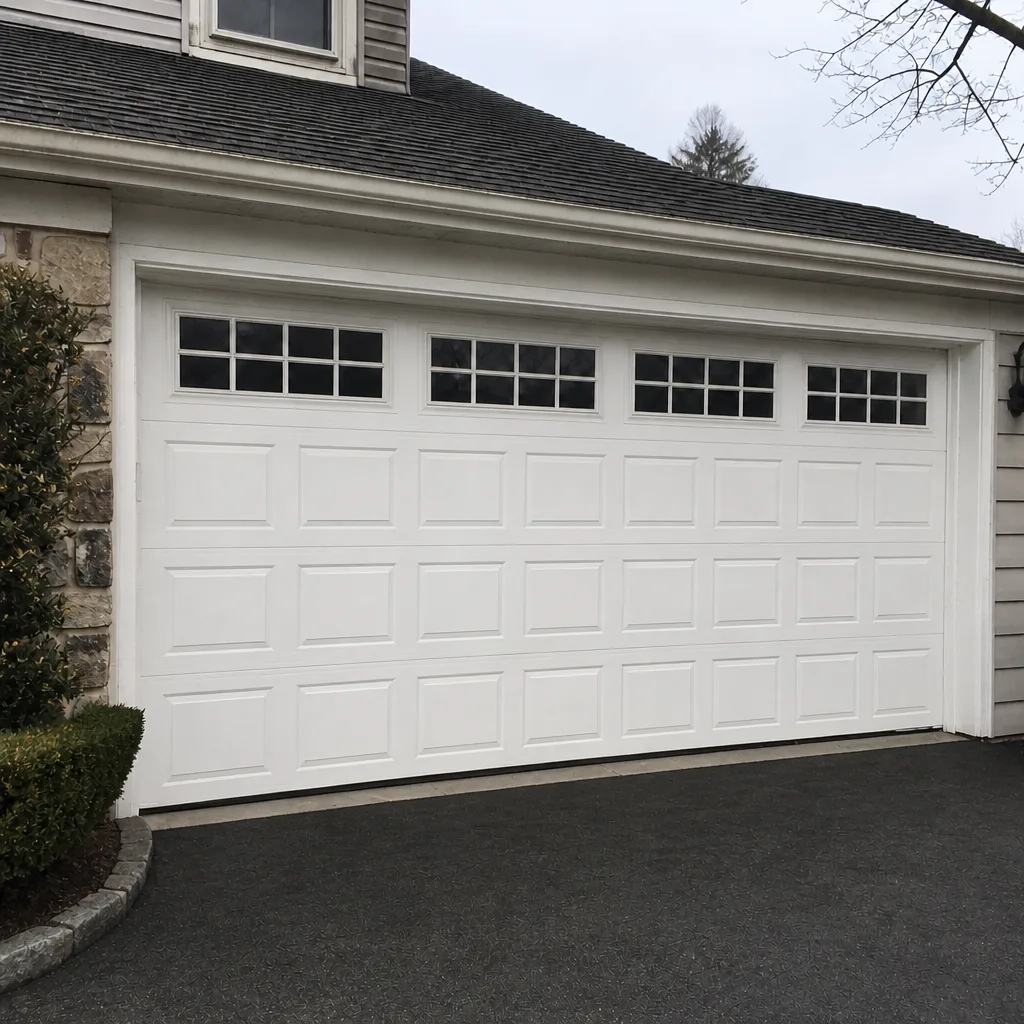
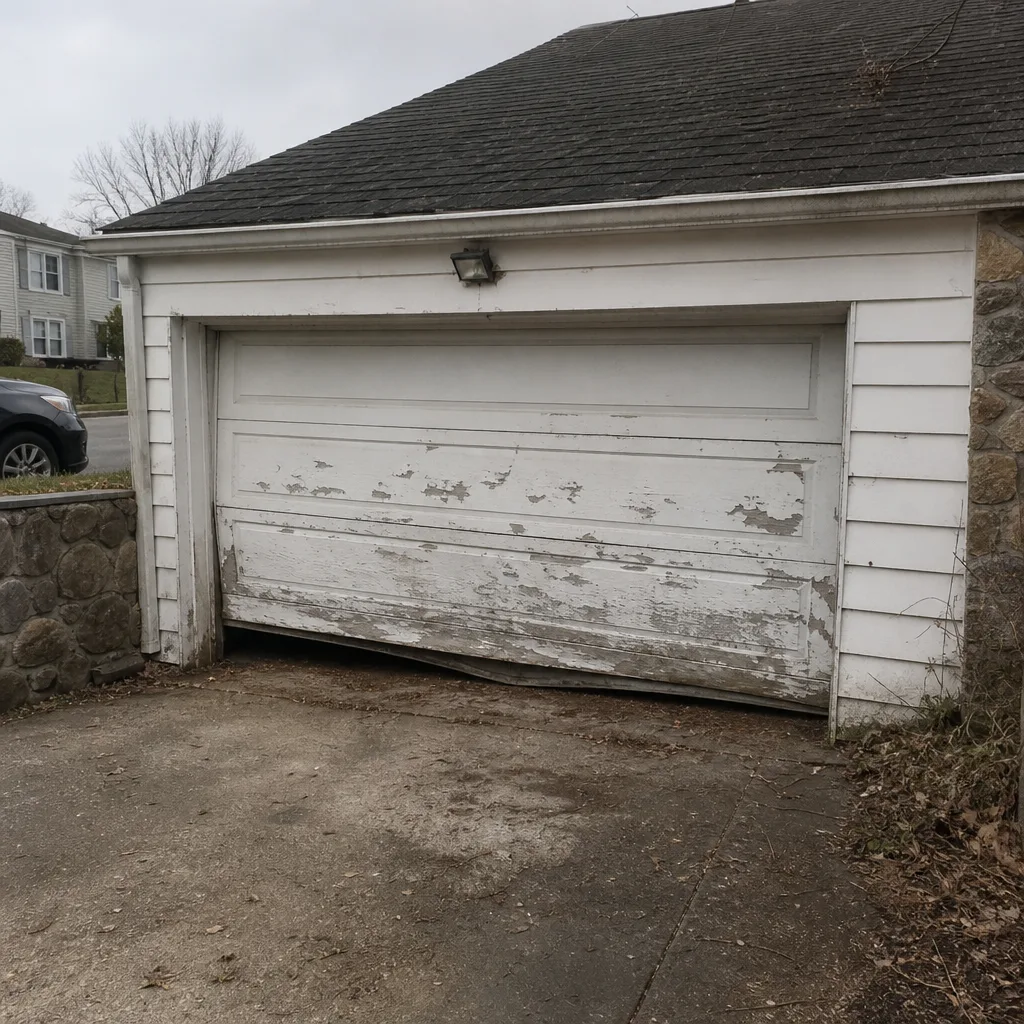
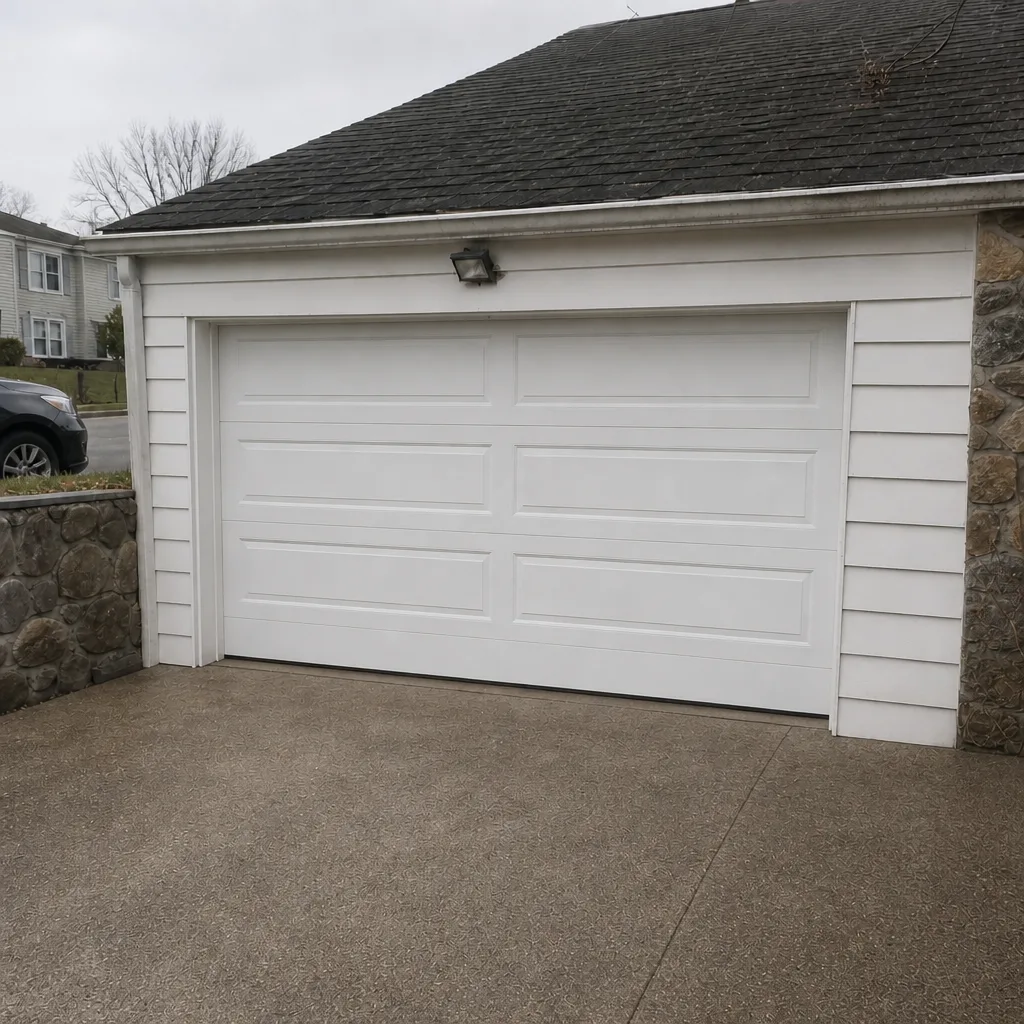
See the difference
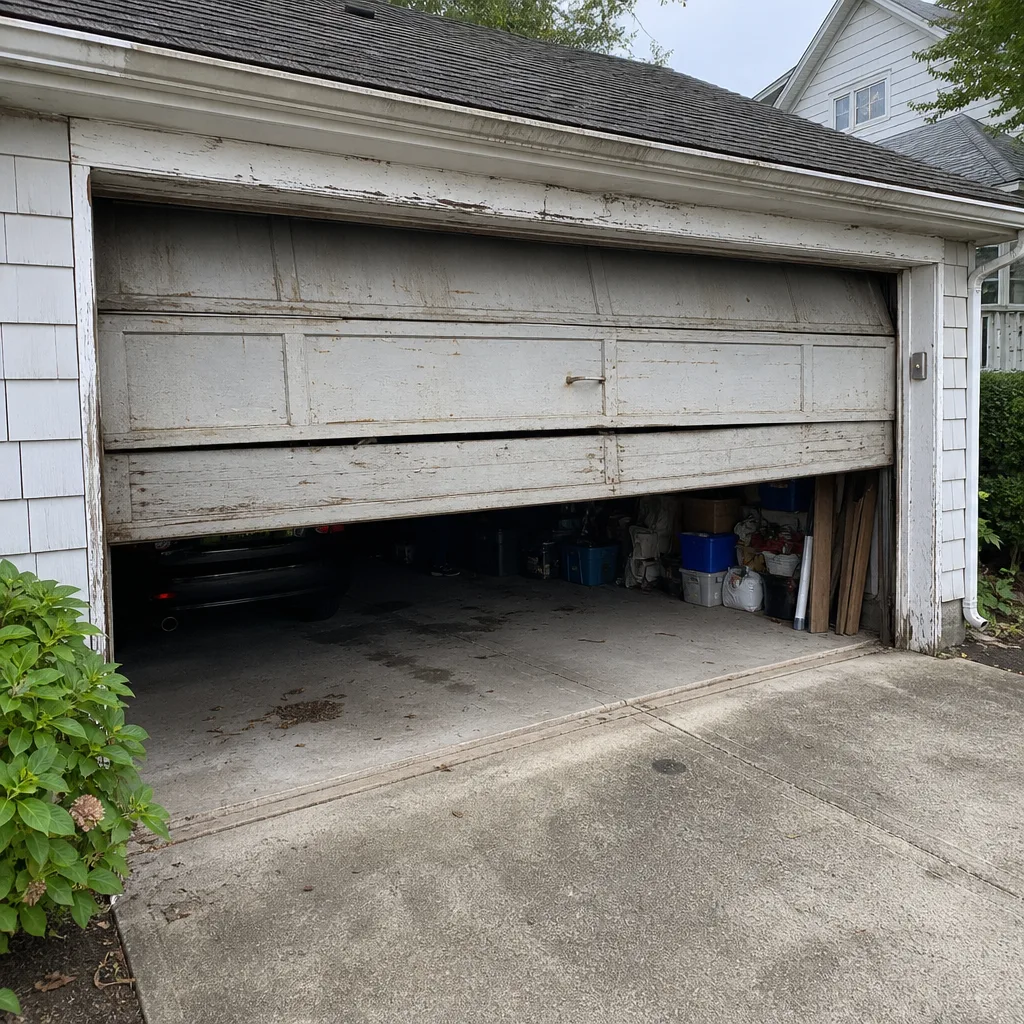 Before
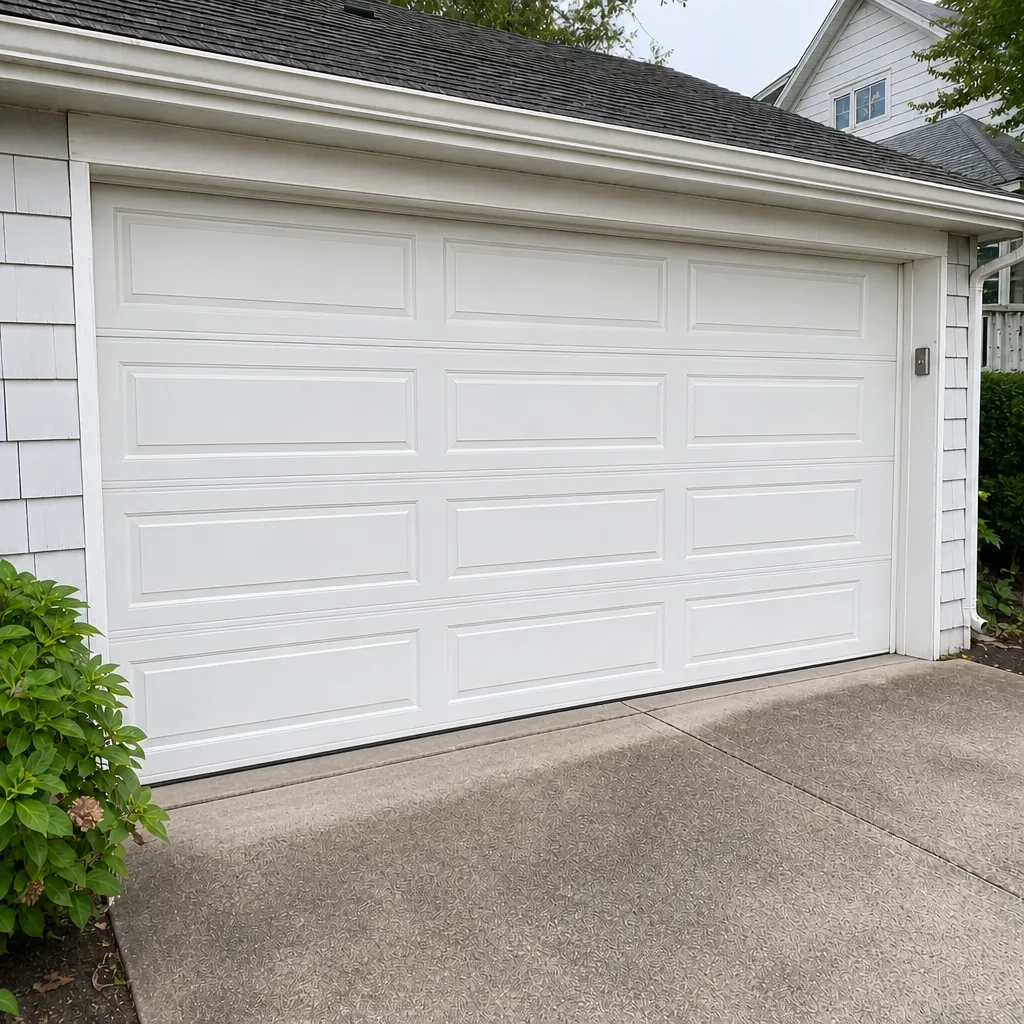 After
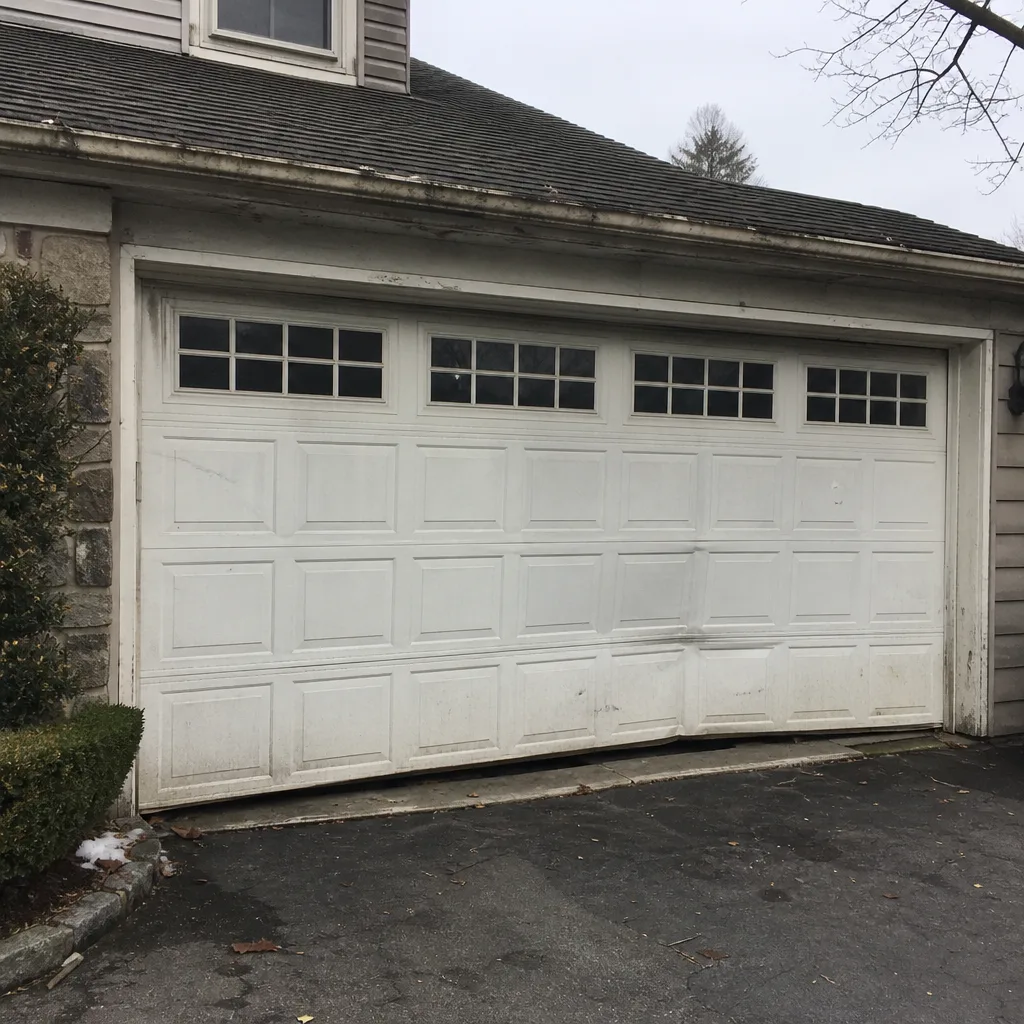 Before
 After
 Before
 After
When to Call a Professional
Call a professional if any of the following is true: the door is stuck open or closed, the spring is snapped or visibly stretched, a cable is frayed or off the drum, the door hangs crooked, the bottom bracket is loose, or the opener cycles but the door won’t move. Those are all cases where DIY is not the answer. So is any door that’s out of balance by hand-test, and any door that has been forced after a failure. For routine repair, our garage door repair team takes on the full range, and we’ll tell you honestly if a job falls safely in the DIY zone instead.
Call (844) 685-3329. We answer 24/7. Fast dispatch from 7am to 7pm, Sunday through Friday.
White Plains Garage Door Repair Pros offers free estimates in White Plains, and we work on LiftMaster, Chamberlain, Genie, Clopay, Amarr, Wayne Dalton, Craftsman, and Raynor systems. The estimate is free and the price is set per job by the written estimate, agreed before any work starts.
Frequently Asked Questions
No. Torsion and extension springs hold stored energy measured in hundreds of pounds, and winding a torsion spring without the correct bars, the correct weight spec, and the correct winding count can cause serious injury. “Handy” doesn’t change the physics. Spring work is the one garage door task we recommend without exception to a trained professional. Call (844) 685-3329 for your options, and the estimate is free.
Spring pricing is per spring, and because springs are usually replaced as a matched pair, a pair costs roughly twice a single spring. The exact number depends on your door’s weight and the spring spec needed, and it’s quoted and agreed before any work starts. Call (844) 685-3329 for an exact quote – estimates are free.
No. The written estimate sets the price, and it’s agreed before work begins. If we discover something that changes the job, we tell you before we start so you can decide. You won’t get a bill larger than the quote you agreed to.
The local professional coming to your home is state-licensed and insured, and we confirm that before dispatch. Our technicians have up to 9 years of experience, and they work on LiftMaster, Chamberlain, Genie, Clopay, and the other major brands already in your garage. Call (844) 685-3329 to book a visit.
Yes. Same-day and emergency service are standing offerings, and a door that won’t close is a security and safety problem that deserves a fast, competent answer. We answer 24/7. Fast dispatch from 7am to 7pm, Sunday through Friday, and a call outside dispatch hours is booked into the next opening. Call (844) 685-3329.
Stop operating the door and unplug the opener. Then disconnect the manual release, keep people out from underneath, and clear the approach. Don’t pry, jack, or force the door – that’s how damage gets worse. Call (844) 685-3329. We answer 24/7.
Weatherstripping, sensor alignment, lubrication, tightening loose track bolts, a single roller replacement with the door closed, and remote programming are genuinely safe. Anything touching springs, cables, or bottom brackets is not. If you’re unsure, our White Plains garage door specialist can tell you whether a job falls on the safe side or not.
Most opener problems are repairable, and our garage door opener repair work covers motor repair, sensor issues, and travel limit problems across the major brands. A replacement is only needed when the motor or the board has failed outright. Call (844) 685-3329 and we’ll diagnose it for free.
The Bottom Line
The garage door DIY question has a real answer, and it’s based on the physical design of the door. Weatherstripping, sensors, lubrication, and tightening bolts are yours to handle. Springs, cables, and bottom brackets are not – the moment you’re winding or unwinding stored tension, you’re working outside what’s safe without a professional. The middle ground is where most of the confusion lives, and it’s where diagnosing your own door and then calling a specialist pays off. In White Plains, the climate makes a pre-winter check worth scheduling, and a knowledgeable specialist can’t be replaced by a general handyman for anything mechanical. Call (844) 685-3329 to get an honest assessment and a free estimate.
Written by the team at White Plains Garage Door Repair Pros.