
Last updated November 23, 2026
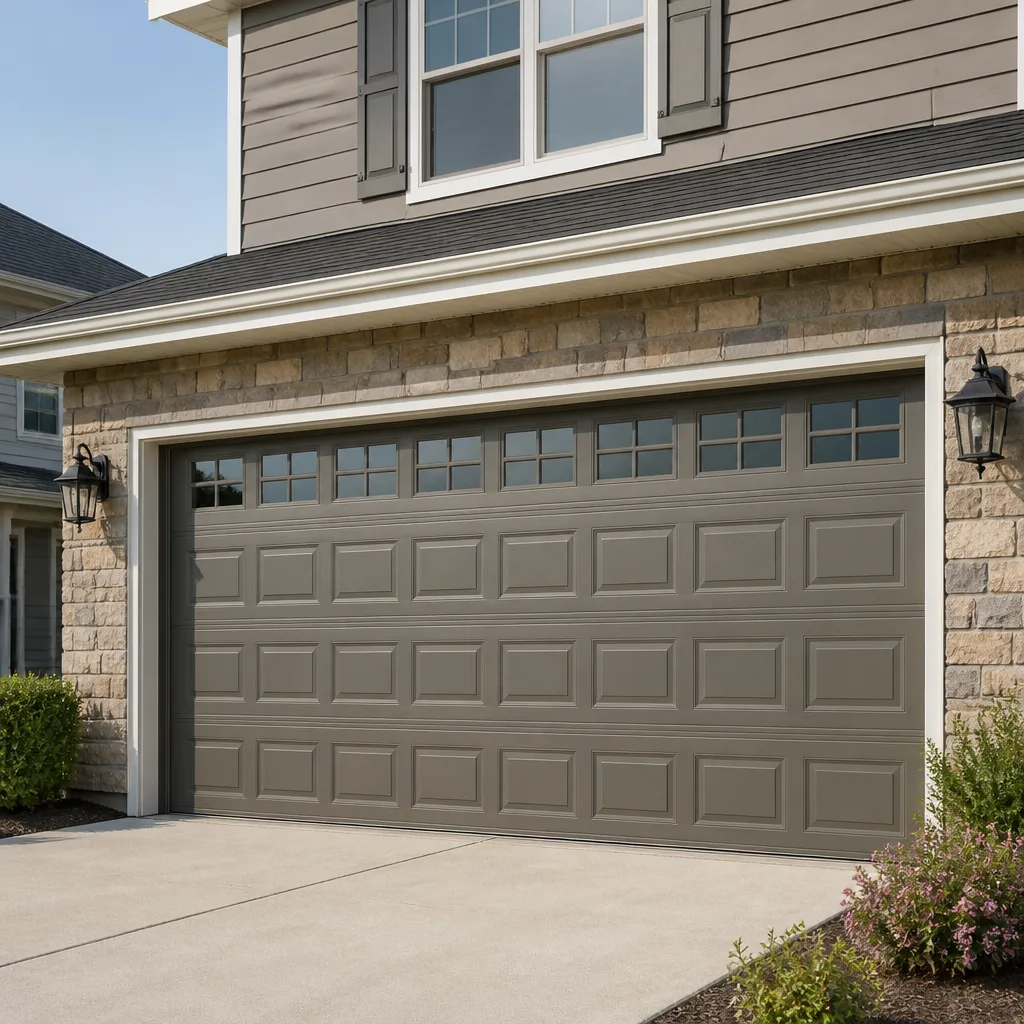 Raised-panel steel
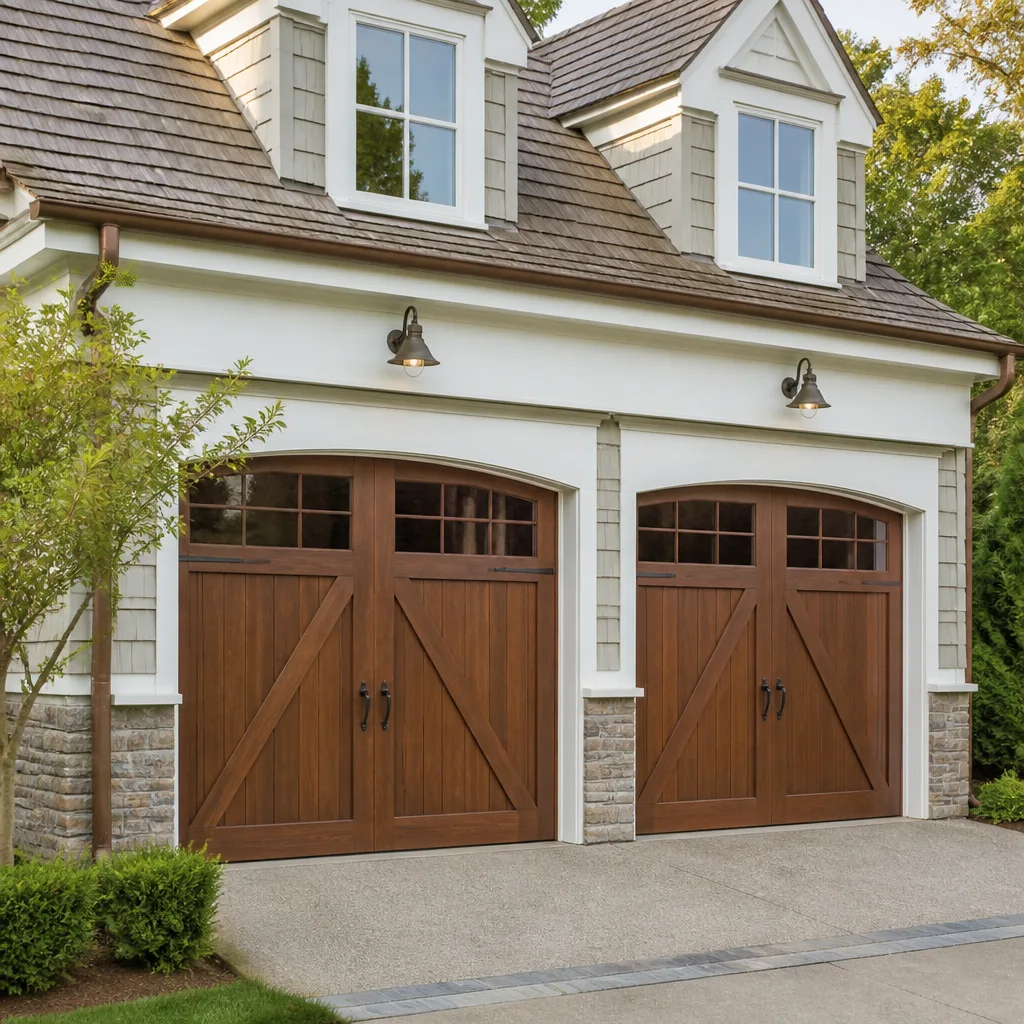 Carriage house
 Modern flush
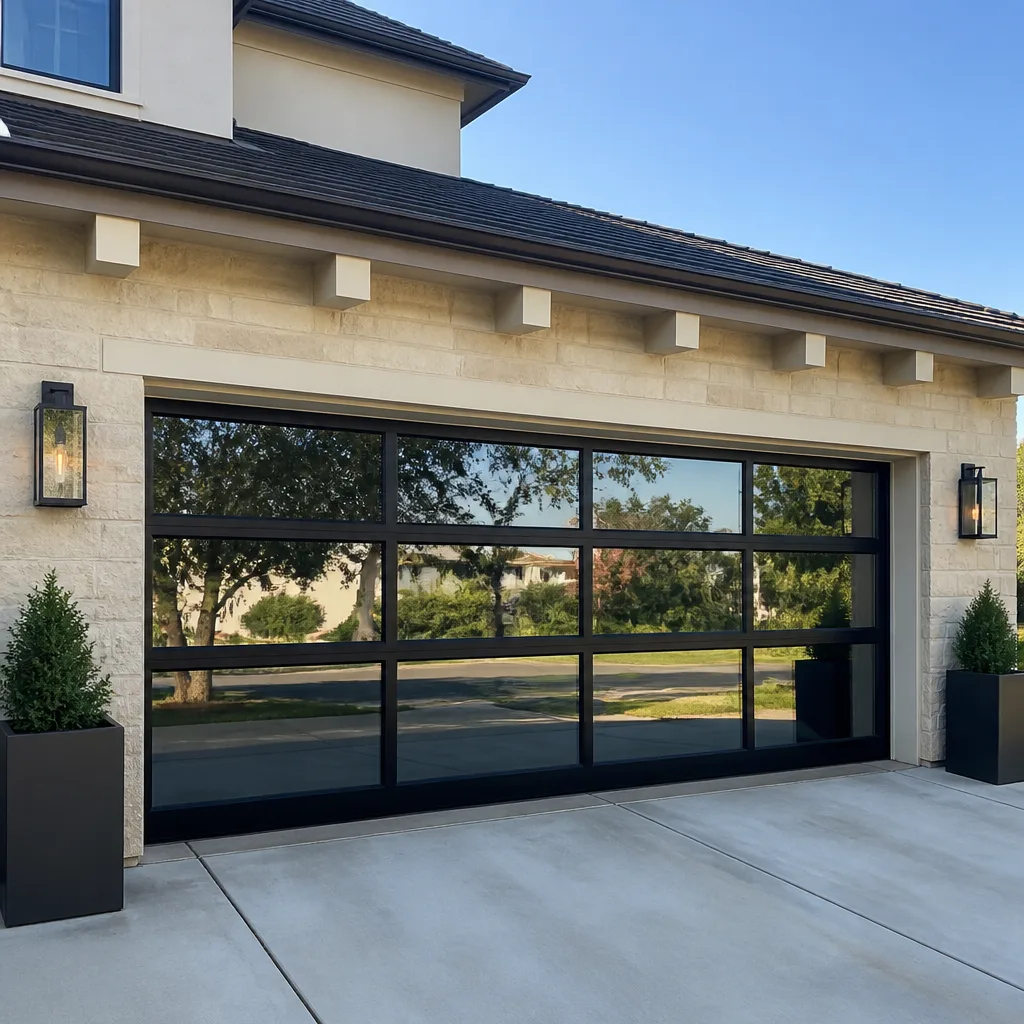 Full-view glass
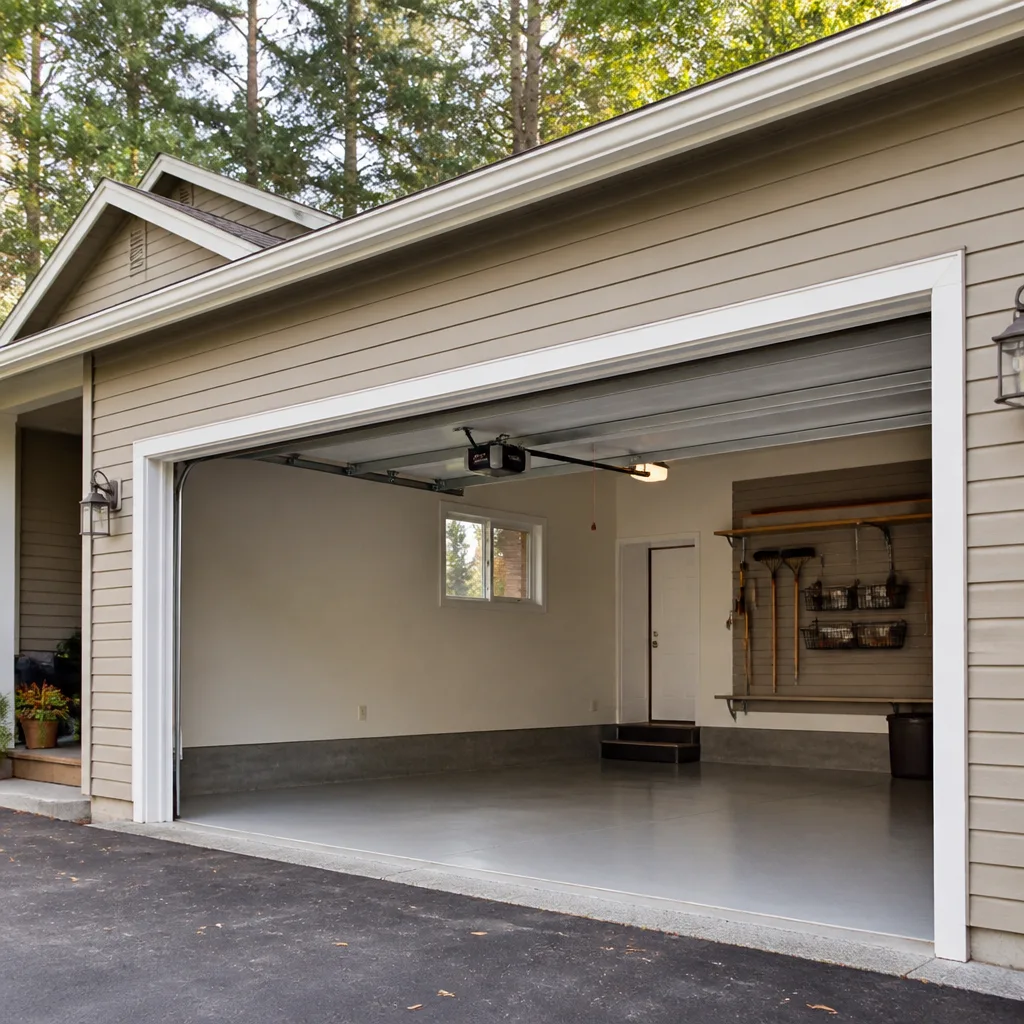 LiftMaster openers
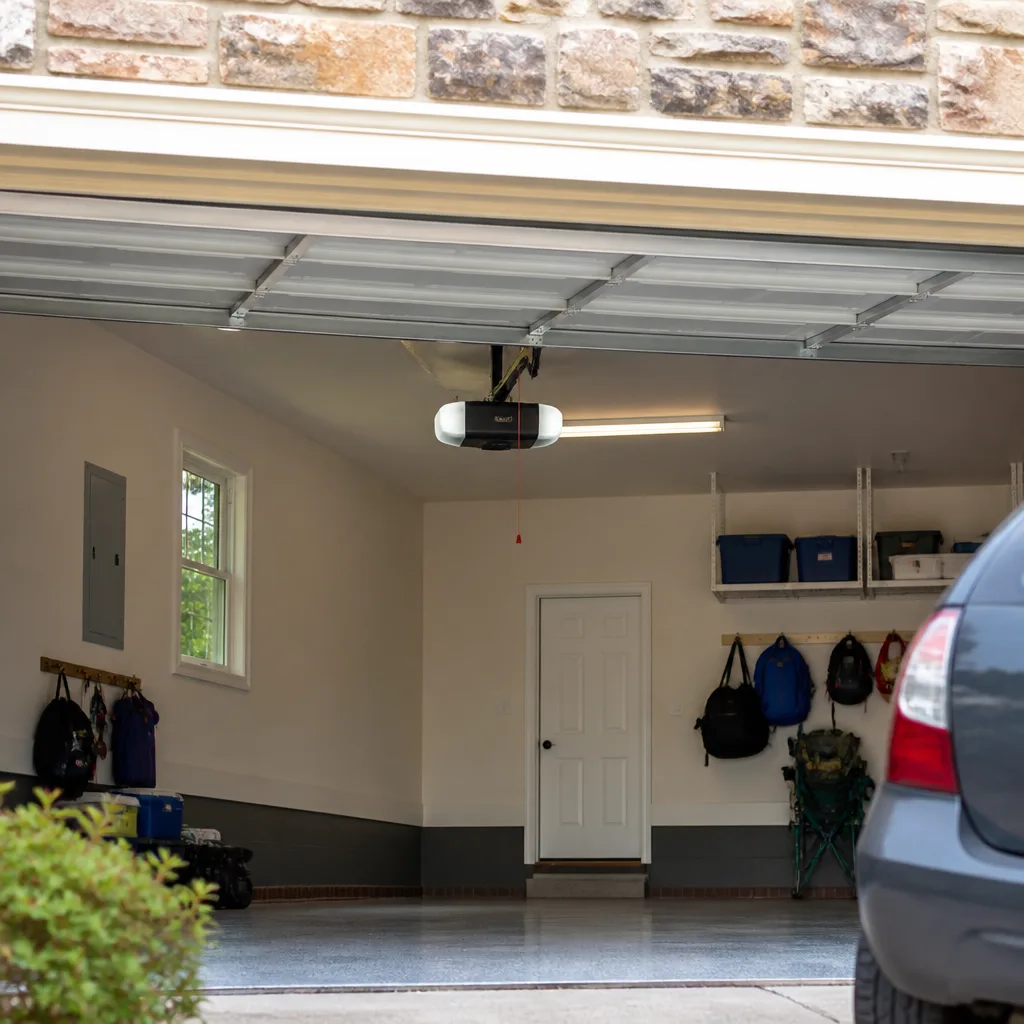 Chamberlain openers
Full 25-point door and opener safety check with every visit - springs, cables, rollers, tracks, and your LiftMaster or Chamberlain opener included
You get a price before we start. It does not change when the pro arrives.
Get your free estimateGarage Door Warning Signs: A White Plains Homeowner’s Reference Guide
A garage door that hesitates for one second before it moves is not “breaking in” or “settling.” It’s showing you exactly where the failure is going to happen, and it’s usually the spring, not the opener. Almost every garage door breakdown we get called out for in White Plains had been broadcasting the same warning for weeks – a small grind, a slight gap, a door that needed two tries to close. The trouble is that nobody told the homeowner what to listen for. This guide fixes that. You’ll learn how to read the sounds, sights, and seasonal behavior of your own door, tell a spring problem from a cable problem from an opener problem, and know which warnings mean call today versus which give you a few weeks to schedule service.
Quick Answer
The main garage door warning signs are grinding or popping noises, a door that jerks or hesitates on the way up, visible gaps or frayed cables, and a door that works in summer but binds in winter. Noisy operation usually points to springs, rollers, or hinges; a door that won’t move at all but the opener motor hums points to the door’s mechanical parts, not the opener. Anything involving a snapped or visibly stretched spring, a hanging cable, or a door stuck halfway open is a stop-and-call situation.
Styles & brands we work with
- Raised-panel steel
- Carriage house
- Modern flush
- Full-view glass
- LiftMaster openers
- Chamberlain openers
Table of Contents
- Sound Index: What Each Noise Is Telling You
- Visual Signs: Spring Fatigue vs. Cable Fraying vs. Roller Wear
- Opener Problem or Door Problem? How to Tell Without Touching Either
- Urgent vs. Schedule-It: Which Warnings Are Safety Hazards
- Why White Plains Winter Changes the Warning Signs
- Seven Things We Check on Every Diagnostic Visit
- Brand-Specific Behavior Worth Knowing
- Common Mistakes to Avoid
- When to Call a Professional
Sound Index: What Each Noise Is Telling You
A garage door should sound like a low, even hum from the opener and very little else. Any new sound is a component reporting for duty. Here’s how to translate what you’re hearing.
- Grinding or a low growl during travel – usually dry or worn torsion springs, or rollers with flat spots. If it started gradually and gets louder in cold weather, springs are the first suspect. If it’s a rumble that seems to come from the track sides, look at the rollers.
- A loud pop followed by a dead door – a torsion spring broke. This is the single most common sound we hear about in White Plains, and it’s the one that needs a same-day call. A door whose spring just popped is being held up by the opener alone, which is not what the opener was built for.
- Scraping or metal-on-metal – the door panel or its rollers are rubbing the track. It’s a sign of a bent track, a door out of alignment, or a loosened hinge. Scraping left alone wears the track and the roller both.
- Popping or a snap from the opener housing itself – often the opener’s drive gear or a stretched chain. The door may still move while the opener is the thing wearing out.
- A dull thud when the door reaches the floor – the closing limit is set too far down, so the door is slamming rather than meeting the floor gently. That stresses the panels and the opener arm.
- Rattling that gets worse over bumps – loose hinge bolts and roller brackets. Tightening is easy; catching them before they strip is the point.
If you hear a pop and then the door won’t lift, don’t cycle it repeatedly to see if it recovers. Winding a spring back into service is the exact scenario that turns a straightforward garage door spring repair into a dangerous one. Stop, pull the door down manually if you can do it safely with the release cord, and call.
Visual Signs: Spring Fatigue vs. Cable Fraying vs. Roller Wear
You don’t need tools to do this. You need a flashlight and about three minutes on a stool. The three wear items that fail most often – springs, cables, and rollers – each have a distinct look on inspection.
Spring fatigue
- A torsion spring (the coil running horizontally above the door) that shows a visible gap or a curl at one end has snapped. That’s an immediate hazard.
- Fatigue short of snapping looks like a spring that no longer holds the door level. If the door lifts easily by hand on one side and feels heavy on the other, the spring has lost tension.
- A door that starts life pulling evenly and later needs the opener to “help” it up is a fatigued spring, not a weak opener.
Cable fraying
- Look at the cable drum at each end of the torsion shaft. A healthy cable winds in clean, even coils. A frayed cable has visible frayed strands or a kink anywhere along its length.
- If the cable is hanging loose or clearly off its drum, do not run the door. This is the second hard stop in this guide.
Roller wear
- Rollers should look round and be a bit soft to touch at the edges. A worn roller has a flat spot, and a metal roller can show a groove.
- Rollers that have gone flat on one side tend to stick in the track and make the door jump at the same spot every time.
Other quick visual checks
- Look at the bottom weather seal: a cracked or torn seal means gaps at the floor and is a common entry point for water and cold air in winter.
- Stand in the doorway and look up: a door that’s noticeably out of square with the header is a hinge or panel problem waiting to become a bigger one.
- Check the track for dents or bent segments. A track with a noticeable wobble in one section is a jam looking for a door.
Opener Problem or Door Problem? How to Tell Without Touching Either
This is the question that decides whether you need garage door opener repair or door repair, and you can answer it in your own driveway in about a minute. It’s also where a lot of homeowners guess wrong and pay for the wrong service.
Here’s the simplest diagnostic in the trade. Pull the red emergency release cord to disconnect the door from the opener, then lift the door by hand – only if it’s safe to do so and nothing looks broken. Then:
- Door moves easily by hand, but not when connected: the door is fine and the opener is the problem. That’s the motor, the drive gear, the logic board, the safety sensors, or the wall control sending the wrong signal.
- Door is heavy by hand and moves unevenly: the door’s mechanical parts are the problem – usually a spring. The opener was doing extra work and probably tried to help until it quit or tripped its internal safety cut-off.
- Door moves fine by hand, and the opener’s motor runs with a humming sound but the door doesn’t move: usually a stripped drive gear or a broken opener carriage. Still an opener repair.
- Door moves fine by hand, and the opener does nothing at all: check the wall button, the breaker, and the safety sensor alignment (a small LED on each sensor is a good coach here). If those all click, the opener needs a technician’s eyes.
One more check: if the door travels partway and reverses, look at the safety sensors mounted at the bottom of the tracks. Sensor misalignment is the most common cause of a reversing door that isn’t a mechanical problem. In White Plains, we see it a lot after a car bump or a plowed driveway’s worth of snow shoves a sensor out of line. Straightening the sensors to face each other is safe and easy to try yourself.
Urgent vs. Schedule-It: Which Warnings Are Safety Hazards
Not every warning means stop. Some mean call this week. The split matters because garage door springs and cables carry real force that can hurt someone, and knowing which camp your symptom falls into tells you how to move.
Call today – safety hazards
- A snapped torsion spring or a door with no spring tension at all. The door is depending on the opener to lift it, and the opener will burn out or the door will come down hard.
- A frayed or loose cable, or one that has popped its drum. Cables under tension can whip.
- A door that’s off its track or visibly out of square. It can bind and drop.
- A door that won’t close at all and stays open overnight. That’s a security issue as much as a mechanical one – your home is open, and it stays open until the door is fixed.
Schedule within the next couple of weeks
- Grinding or groaning that doesn’t stop with a little lubrication.
- A door that reverses partway up or stalls on the down cycle.
- Visible roller flat spots or hinge looseness that hasn’t affected operation.
- A worn bottom seal or a door that rattles but still opens and closes fully.
- An opener that’s slow, jerky, or occasionally needs a second button press.
One firm rule: never inspect or attempt to adjust a torsion spring or tension cable yourself. The spring stores enough energy to be deadly, and improvised tools are how injuries happen. That’s why our garage door repair visits always start with a hands-off look. For genuinely stuck doors, a garage door that won’t close at night, or an open garage you need secured, that’s what our White Plains Garage Door Repair Pros team’s emergency service is for. We answer 24/7, and our fast dispatch from 7am to 7pm covers Sunday through Friday. Same-day service is the norm for the urgent cases listed above.
Why White Plains Winter Changes the Warning Signs
This is the part of the guide that most garage door advice online skips, and it matters more here than almost anywhere. White Plains sits in the lower Hudson Valley – cold winters, fast temperature swings, and snow and ice in the mix through much of the season. All three change what your door does.
A garage door that runs smooth in July and binds in January is telling you something specific: the metal has contracted, the lubricant has thickened, and the tolerances in the track, rollers, and hinges are all tighter than they were in summer. If the door suddenly starts sticking, hesitating, or needing two tries in the first cold snap, the door isn’t “settling in” for winter. It’s revealing how close the springs and rollers already were to the edge.
Winter-specific warnings to watch for
- Sluggish lift in the first cold snap: the opener has lost some of its margin. Worth a look before it gives up entirely. If the door’s hard to lift by hand, suspect the spring.
- Door reverses when it meets the floor: expanding ice and packed snow under the door increases the resistance, and a marginal force setting trips the safety reverse.
- A wheel-hung door in the cold: never force it. The track is trying to tell you it’s jammed.
- More noise in January than in December: the lubricant in the rollers is thickening. A winter service call handles that before it turns into a stuck door.
- A door that fails the morning after a hard freeze: a spring that’s been hanging on for a season will often pop when the temperature plunges.
The same logic flips in summer. Heat expands the metal, the door may drag on a warped track, or the opener may strain pushing a door that’s fighting itself. A door that works in January and struggles in July is telling you the track or panel alignment needs correcting.
Seven Things We Check on Every Diagnostic Visit
When a White Plains homeowner calls us with a warning sign, this is what a garage door diagnostic looks like from our side. It’s a good map of what a trained technician inspects – not a checklist to run through yourself.
- Spring tension and condition. We check whether the torsion springs are at the right tension and whether either shows the fatigue pattern we covered above.
- Cables and drums. We check the cable drum wind and look for fraying from a safe distance.
- Track alignment. We run a straight edge along the tracks and check for bends that would bind a healthy roller.
- Rollers and hinges. We check roller wear and hinge tightness from top to bottom.
- Bottom seal and closing force. We check that the door meets the floor with a light, even seal and reverses on contact with an obstruction.
- The opener. We check the drive gear, chain or belt tension, the safety sensor function, and the internal force and travel limit settings.
- Balance test. Disconnected from the opener, the door should lift and stay where you leave it by hand. That’s the whole test that tells us your springs, cables, and track are working together.
Brand familiarity cuts time off this process. Our technicians work with LiftMaster, Chamberlain, Genie, Clopay, Amarr, Wayne Dalton, Craftsman, and Raynor – which means we usually know how a specific door or opener behaves before we arrive. If your hardware is one of these and something’s off, we’re already familiar with the inside of it.
Brand-Specific Behavior Worth Knowing
Every brand has its own personality when it wears out, and knowing yours tells you which warnings matter most.
A Wayne Dalton door with the older TorqueMaster torsion system has its springs inside a tube, so you won’t see a snapped spring the way you would with a standard torsion setup. Instead, the signs are a door that won’t hold its position by hand and an opener that’s straining. A Clopay steel door – a very common sight in White Plains neighborhoods – tends to show its age in the panels and bottom seal first, so a water-stained or cracked seal is your early notice. An Amarr door is often paired with a LiftMaster or Chamberlain opener, and the smart-control behavior of those openers can mask a door problem: the opener keeps trying, so you don’t notice the extra work until something gives.
Craftsman openers have their own well-worn failure points (drive gears and logic boards), and a Raynor door’s hinge wear tends to show up as a particular rattle as it lifts. None of these is a warning louder than another – they’re just the specific places to look first, depending on what’s in your garage. Related reading: our full-service garage door repair page and garage door spring repair page explain what a fix looks like once the symptom has a name.
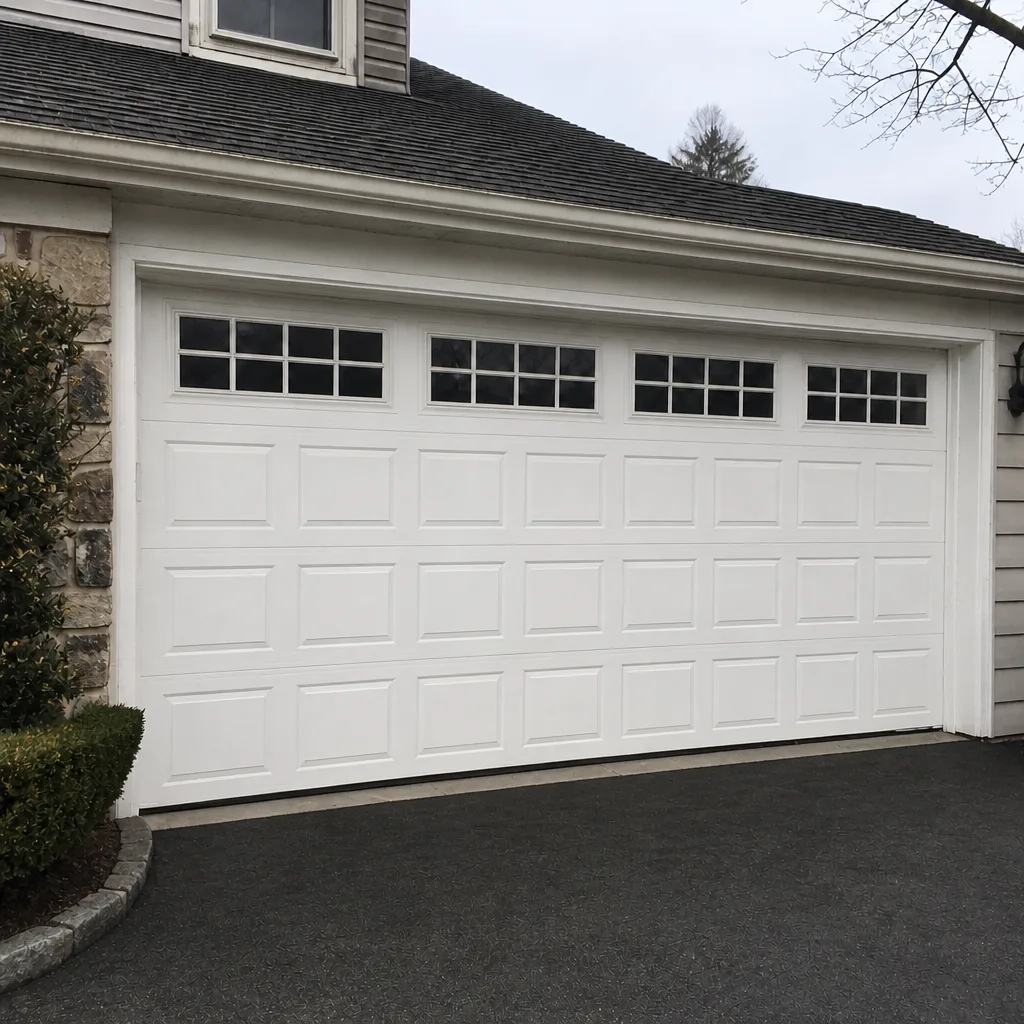
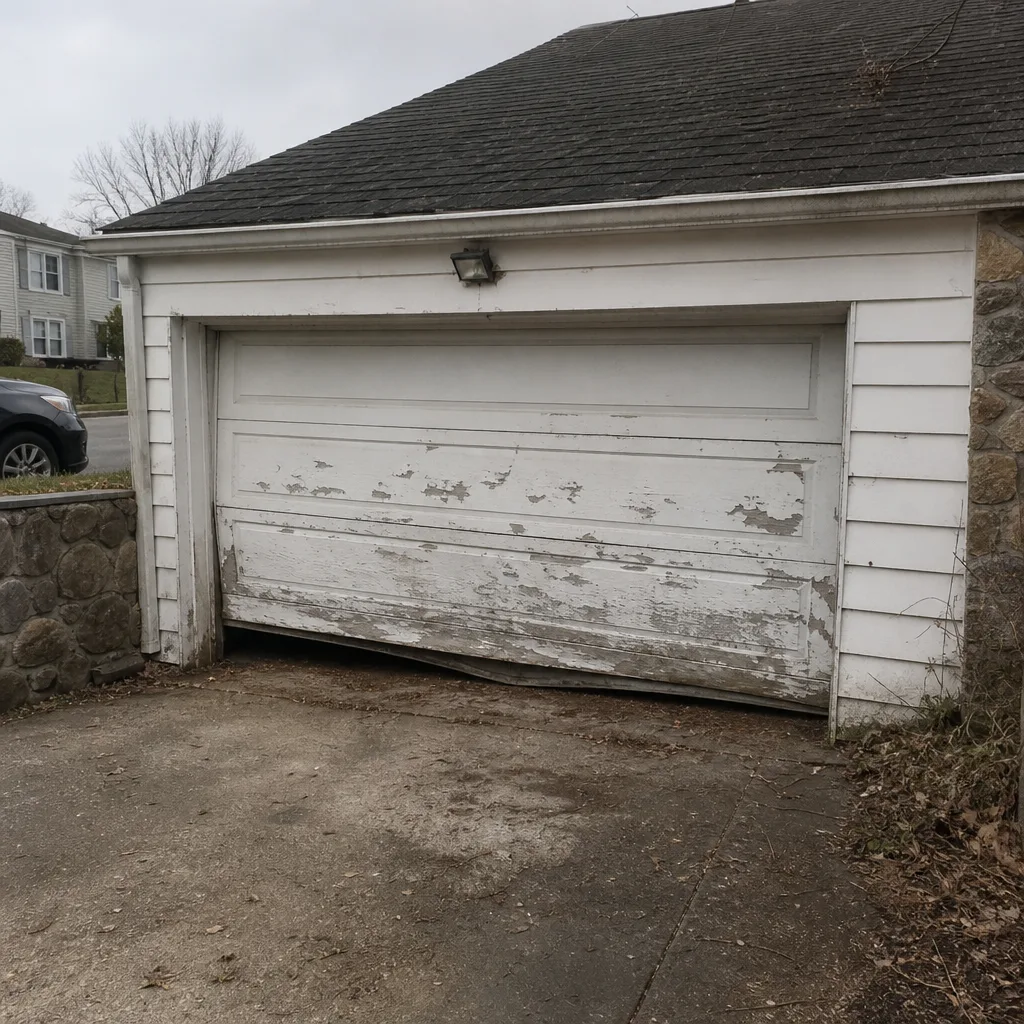
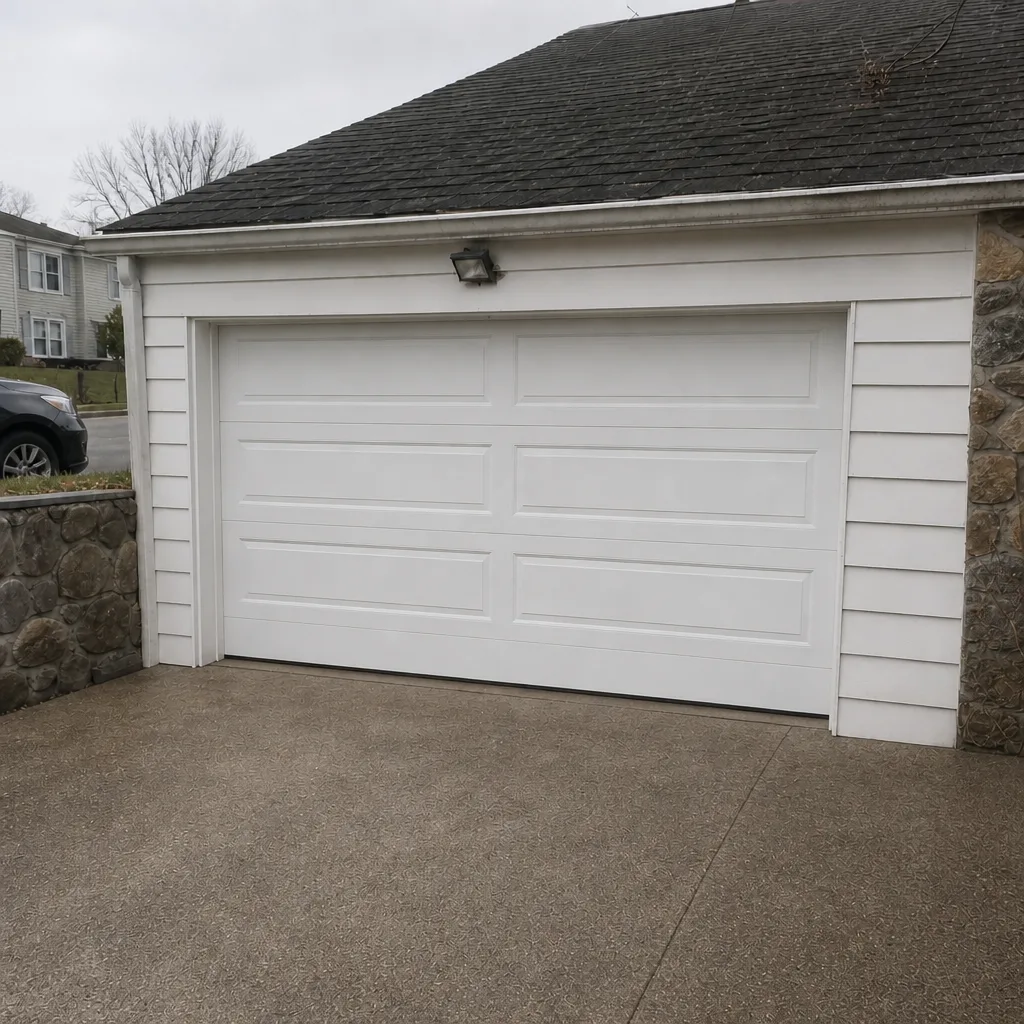
See the difference
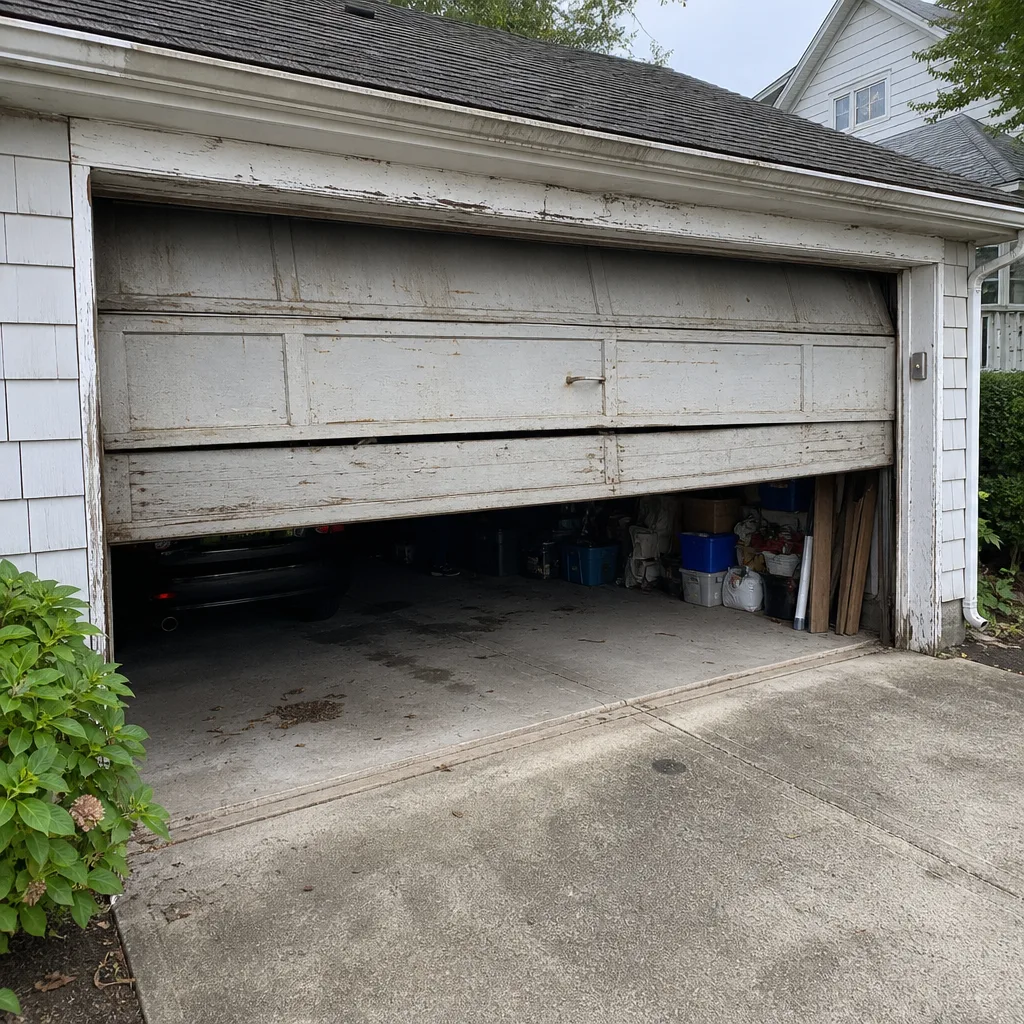 Before
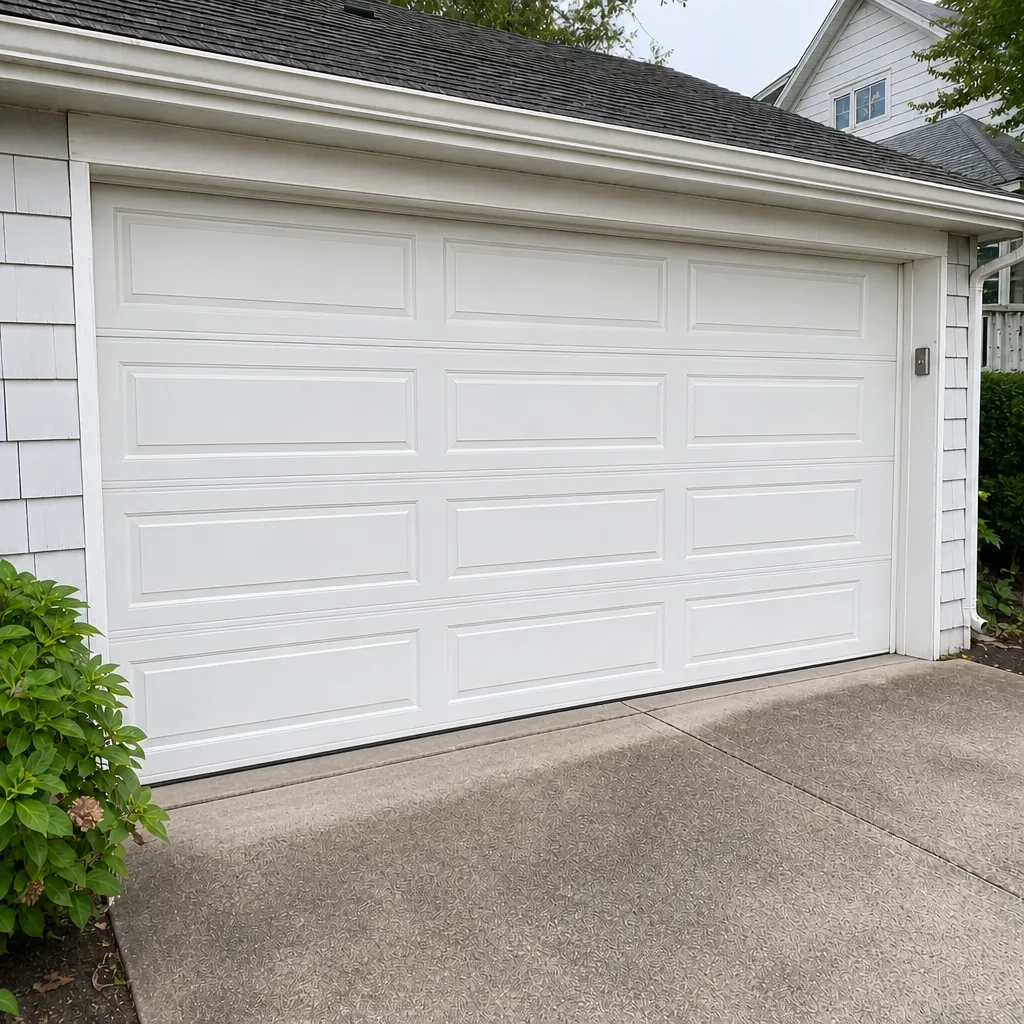 After
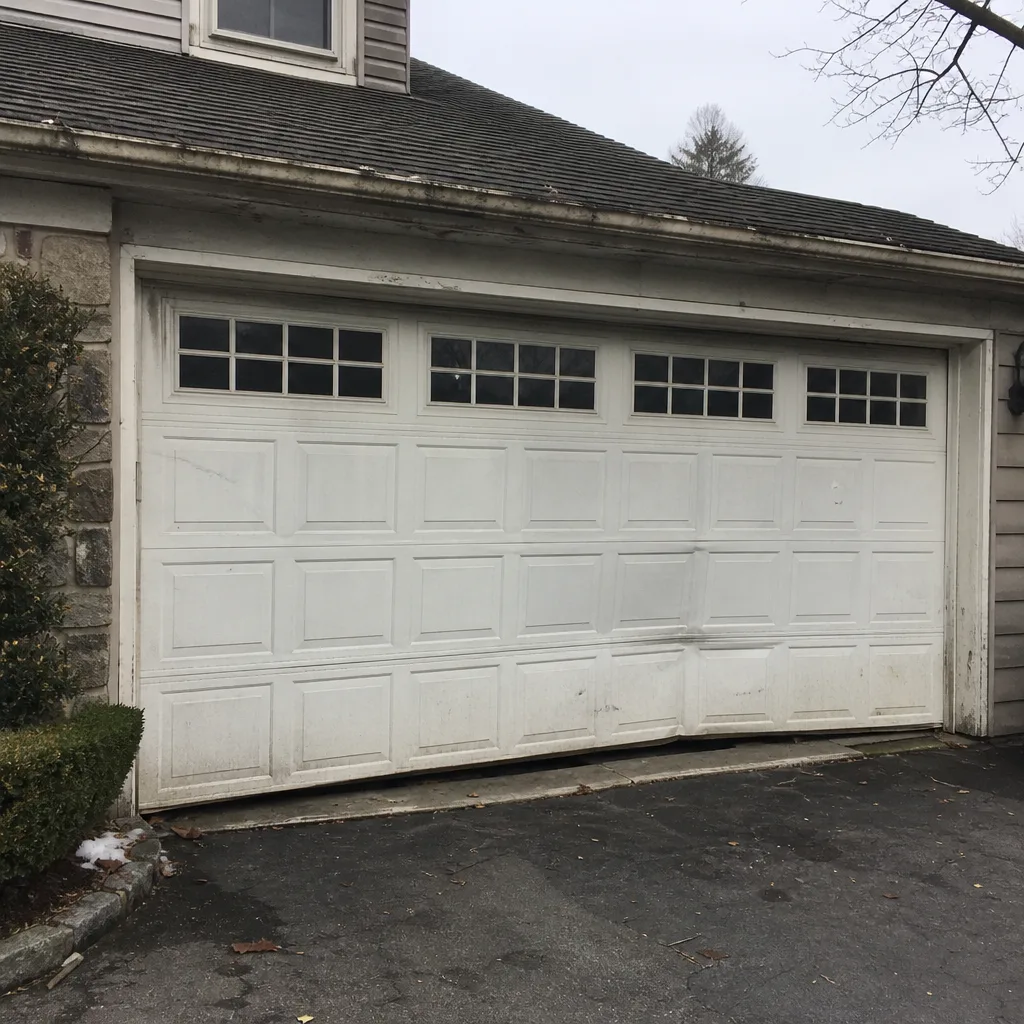 Before
 After
 Before
 After
Common Mistakes to Avoid
- Repeatedly cycling a door that’s already gone quiet. Every pulse you send to a door with a broken spring tightens the opener’s motor. One test press, then stop.
- Calling the opener the problem too early. Nine times out of ten, a door that won’t rise is a spring problem. Replacing the opener first is money spent on the wrong part.
- Ignoring a door that works in July but binds in January. That’s the cheapest moment to schedule service, before a snapped spring forces an emergency call.
- DIY spring or cable work. The springs on this door are under tension strong enough to injure. Winding a torsion spring without training or the correct winding bars is how serious injuries happen.
- Spraying WD-40 on everything. The label on a general-purpose lubricant isn’t a garage door product. Use only a garage door lubricant, and only on the rollers, hinges, and tracks.
- Building a wall of snow against the door. After a White Plains winter storm, piled snow leaning on the bottom panel warps it and stresses the tracks. Keep the panel clear.
- Letting a loose sensor ride. A misaligned safety sensor stops the door from closing at all, and the fix is usually ten seconds of straightening. Don’t pay a callout for it if the sensor LED is dark.
When to Call a Professional
Call a trained technician for any symptom involving a spring, a cable, a door off its track, a door that won’t close and secure your home, or an opener that’s humming while the door stays still. Call the moment you hear a pop and the door loses lift – don’t run it again. Call, too, if your door is older than your patience with it and you’ve had two warnings in the same season. In our experience, that’s the point where service is cheaper than waiting. White Plains Garage Door Repair Pros offers free estimates in White Plains – call (844) 685-3329. We answer 24/7, and our fast dispatch from 7am to 7pm runs Sunday through Friday. Our technicians have up to 9 years of experience across the brands already in White Plains garages, and we can work with your insurer when a repair is part of a claim.
Frequently Asked Questions
The most common first signs are a new grinding or popping sound, a door that hesitates or jerks on the way up, and a door that needs two tries to close. A door that runs smooth in warm weather and binds in the first cold snap is also an early warning; the spring or rollers are already at the edge. Call (844) 685-3329 for an exact quote – estimates are free.
In White Plains, typical repair work runs from the low hundreds for rollers, hinges, or sensor work up to a few hundred for spring replacement, depending on the door and the part. A matched pair of springs is usually replaced together and costs roughly twice a single spring. The written estimate sets the final price, and we give it before any work starts. Call (844) 685-3329 – estimates are free.
Yes. A torsion spring under tension can cause serious injury if you try to adjust or replace it without training and the right tools. If the spring has visibly snapped, don’t lift the door or run the opener again – keep the door closed if you can do so safely and call a specialist. Call (844) 685-3329 to schedule a spring repair.
Not usually. A humming opener with a still door most often points to a broken spring or a stripped drive gear, not a dead motor. Pull the release cord and try lifting the door by hand: if it’s heavy, the door is the problem; if it lifts easily, the opener is. Either way, call (844) 685-3329 for a proper diagnosis.
Yes. A door that won’t close leaves your home open, so we treat it as priority work. We answer 24/7, fast dispatch from 7am to 7pm runs Sunday through Friday, and same-day service is available for most urgent cases. Call (844) 685-3329 to book a same-day repair.
No. We quote and agree the price in writing before any work starts, so the number you approve is the number you pay. If the inspection turns up something different from what the phone description suggested, we explain it and re-quote before touching the job. Call (844) 685-3329 for a free estimate.
The Bottom Line
Garage doors almost always announce a failure before it happens. Grinding usually means springs or rollers. A pop followed by a dead door means a snapped spring. A door that works in July and binds in January is telling you the metal has contracted and the spring is fatigued. Separating an opener problem from a door problem takes one hand-lift test. And the moment the symptom involves a spring, a cable, or a door off its track, hand it to a trained technician. If you’re reading this in White Plains and any warning in this guide feels familiar, call White Plains Garage Door Repair Pros at (844) 685-3329 for a free estimate. We answer 24/7, and our fast dispatch from 7am to 7pm runs Sunday through Friday.
Written by the team at White Plains Garage Door Repair Pros.