
Top Signs You Need Garage Door Service – Don’t Ignore These
The clearest signs you need garage door service are a door that moves slower than it used to, new noises (grinding, popping, or scraping), a bottom seal that no longer meets the floor evenly, and a door that won’t stay balanced halfway up. None of these fix themselves, and most get more expensive the longer you wait. Not every warning means a breakdown is coming tomorrow, but a garage door rarely fails without giving you weeks of notice first. If you’d rather not climb a ladder to investigate, call (844) 685-3329 and we’ll take a look.
Key Takeaways
- A door that suddenly opens three seconds slower is usually a spring losing tension, not the door “getting old.”
- Each type of noise points to a different part, so describe what you hear accurately.
- A 30-second balance test and a 10-second sensor test catch most problems early.
- White Plains winters stress cables, rollers, and seals in ways summer heat doesn’t.
- Springs and cables are the two components you should never touch yourself.
Why a Slower Door Is a Warning, Not Just Wear
A garage door that takes three seconds longer to open than it did last year isn’t aging gracefully. It’s usually a torsion or extension spring that has been losing tension slowly, and a failing spring tends to let go at the worst possible moment: the first genuinely cold morning of a White Plains winter, when the metal is most brittle and the door is heaviest to lift. That “first cold morning” pattern is real and it’s predictable, which is exactly why we’d rather you call about a slow door in October than a snapped spring in January.
A door that has slowed down is telling you the lifting system is working harder than it should. Here’s what to check without touching any hardware:
- Speed change: Compare how long a full open cycle takes now versus what feels normal to you. A steady, noticeable slowdown over weeks is the signal.
- Uneven movement: Watch the door travel up. If one side lags or the door shudders, the springs may be mismatched or one is failing.
- Strain sounds from the opener: A motor that groans louder than before is compensating for tension it no longer has.
On a properly maintained door, a spring should hold steady tension for years and the door should move at a consistent pace every time. When that pace drifts, it’s the countdown starting. We handle garage door spring repair as a dedicated specialty because springs are the most dangerous part of the whole system, and a trained set of hands matters here more than anywhere else on the door.
What Your Door’s Noise Is Telling You
Different noises come from different components, and knowing the difference helps you describe the problem accurately when you call. A grinding door is usually a roller or bearing issue. A popping sound often points to a cable or a worn torsion spring. A scraping noise is frequently a track that’s bent or a door that’s out of alignment. Here’s how each one usually breaks down in White Plains:
- Grinding: Worn steel rollers, dry hinges, or a bearing that’s given up. Often fixable before it damages the track.
- Popping: A cable starting to fray or slip off a drum, or a torsion spring that’s partially failed. This one should not wait.
- Scraping: The door is rubbing against the track or frame, often after a small impact or settling. Left alone, it wears the door edge and the track.
- Squealing: Usually a lubrication or roller problem, the least urgent but easiest to resolve.
When you call, tell the technician the exact sound. “It grinds on the way up but only past the halfway point” is far more useful than “it’s making a noise,” and it helps us arrive with the right parts for your Genie or Clopay system already in mind. Garage doors are all we do, so decoding that noise is something our technicians do every day.
The 30-Second Balance Test That Reveals Spring Wear
Any homeowner can run a balance test in about 30 seconds, and it’s the single most useful check you can do yourself. Disconnect the opener first by pulling the release handle so the door is in manual mode. Lift the door to about halfway and let go. On a properly balanced door, it should stay put or drift only slightly, holding its position because the springs are carrying the weight. If the door slams down, or races up on its own, the springs are out of balance or failing. That’s a spring problem you should have looked at, not something to adjust yourself.
The result should look boring. A balanced door just sits there. If yours drops hard, sag, or climbs on its own, you’ve found spring wear before it became a snap. Reconnect the opener only after you’ve noted the result, and keep anyone from walking under a door that didn’t hold. In our experience, a failed balance test is the most common early indicator of a spring that’s weeks away from failing, and catching it here avoids the mid-winter emergency. For a door that won’t stay open or is fighting you, this is a good moment to look at garage door repair before the problem grows.
Reading the Gap Along Your Bottom Seal
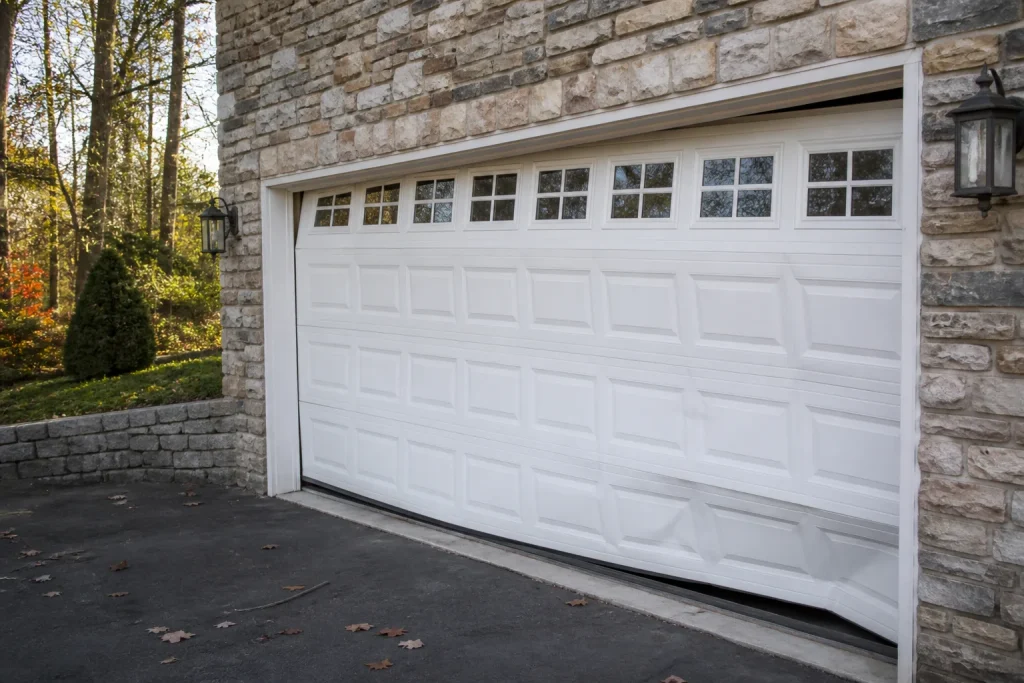
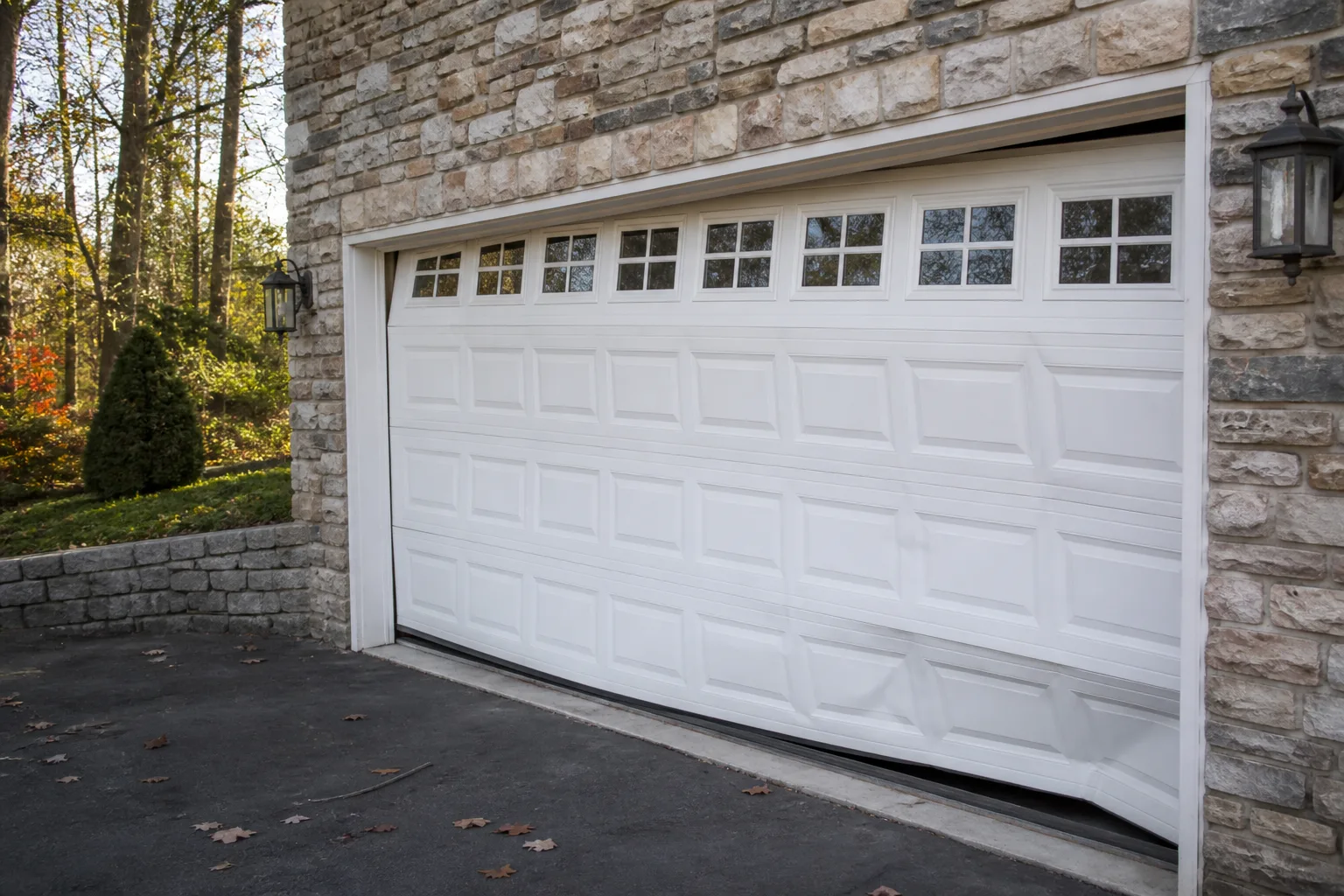
A closed door should meet the floor evenly along its whole width. When you spot a gap that’s wider on one side or changes shape depending on how the door stops, the pattern tells you what’s happening. A gap that runs the length of the bottom but stays even usually means the weather seal itself has flattened or cracked and needs replacing. A gap that’s tight on one side and wide on the other, or that runs diagonally, often points to a bent track or a door that’s sitting out of level. If the gap only appears in one spot and the floor looks like it’s shifted there, that can be a foundation settling issue rather than a door issue.
In White Plains, the usual suspect in winter is a compressed weather seal that no longer springs back after the cold. Compression is normal, but a seal that stays flattened lets in drafts, water, and pests. A bent track shows a different pattern: the gap tracks the bend and doesn’t change. Note where the gap is widest, whether it changes as the door moves, and whether the floor looks uneven at that point. That’s the kind of detail that lets a technician diagnose the door on the first visit instead of the second.
Why White Plains Winters Break Different Parts Than Summer
Cold weather changes which parts fail first. In a White Plains winter, the failure modes skew toward cable fraying, roller freeze, and weather seal compression, while summer heat tends to stress the opener motor and the springs through expansion. The temperature swings between a cold night and a milder day are what do the most quiet damage, because metal contracts and expands and small cracks in a cable open a little wider each cycle.
- Cables: Cold makes them brittle; a frayed strand that held in fall can snap in deep cold.
- Rollers: Moisture can freeze a roller in its track or stiffen the bearings, so the door drags.
- Weather seals: The rubber flattens under cold and loses its rebound, opening drafts at the floor.
- Springs: The heaviest load on a cold morning is exactly when a worn spring lets go.
If your door is a Wayne Dalton or Amarr model, the specific hardware matters, and having a technician who already knows that system saves a return trip. Before the first hard freeze, it’s worth having the cables and rollers checked so the cold finds nothing to break. This is where garage door opener repair often overlaps with the mechanical side, because an opener that’s straining against frozen rollers wears out faster.
The 10-Second Safety Sensor Self-Test
Your safety sensors are supposed to stop the door if a child or pet is in the way, and a 10-second test tells you whether they would. With the door open, wave a hand or a broom handle through the sensor beam while the door is closing. If the door stops and reverses, the sensor is responding. If it keeps going, stop the door and treat it as a problem to fix before using it again. A sensor that “passes” can still be miscalibrated: if it’s mounted slightly off, or one lens is dirty or angled, it may work in one position and fail in another. That’s the danger of a passing test.
Run the test monthly and again after any power outage, since a sensor can reset out of alignment. Check that both lenses face each other squarely and are clean, and that nothing is stored in the beam’s path. Do this in White Plains before winter, when a door that won’t reverse on a person is a genuine safety hazard. If your sensor test fails, or you’re not sure how to judge it, that’s a good reason to have a technician look.
Where this gets serious: springs, cables, and the torsion system carry stored energy that can cause severe injury if you try to adjust them yourself. We never recommend DIY work on those parts. A trained professional handles them safely, and that’s not a sales line, it’s the reason spring work is our specialty.
When to Call a Pro
Call a pro when the balance test fails, when you hear popping or the door won’t hold open, when the sensor doesn’t reverse the door, or when the door is off its track. Those are the cases where a few minutes of DIY can turn a repair into an injury or a bigger bill. For a door that’s simply slow, noisy, or dragging a little at the bottom, a technician can catch the problem early. Our technicians have up to 9 years of experience, and we’re factory-familiar with eight major brands, so we arrive knowing the hardware already in your garage.
We offer same-day service and emergency response when the door won’t secure your home, with fast dispatch from 7am to 7pm and phones answered 24/7. The price is quoted and agreed before any work starts, so there are no surprises when the invoice arrives.
Related services in White Plains: garage door spring repair and garage door opener repair cover the two most common warning signs above.
The Bottom Line
A slow door, a new noise, an uneven gap at the floor, and a sensor that won’t reverse are the countdown ticking. Catch them early and a garage door problem stays small; ignore them and the first cold morning of winter usually decides for you. The balance test and the sensor test are the two checks worth doing yourself, and everything involving springs, cables, or the torsion system is best left to a specialist. If you’re in White Plains and need help, White Plains Garage Door Repair Pros offers free estimates, and we work on Genie, Clopay, Amarr, Wayne Dalton, and more. Call (844) 685-3329. We answer 24/7. Fast dispatch from 7am to 7pm, Sunday through Friday.
Frequently Asked Questions
A door that opens more slowly than it used to is usually the first sign, and it typically means a spring is losing tension. The door is telling you the lifting system is working harder, well before it fails. Call (844) 685-3329 for an exact quote on a spring check, since estimates are free.
Yes, both are safe to do yourself. Disconnect the opener and lift the door to halfway for the balance test, and wave a hand through the sensor beam while the door closes for the sensor test. Never adjust springs or cables yourself. Call (844) 685-3329 if either test fails.
Cold makes cables brittle, freezes rollers, flattens weather seals, and puts the heaviest load on springs, which is why a worn spring often lets go on the first cold morning. A pre-winter check catches those weak points before they snap. For a seasonal inspection in White Plains, call (844) 685-3329.
No. The written estimate sets the final price, and we agree on it before any work starts. You’ll know the cost before a technician touches the door. For a free estimate, call (844) 685-3329.
Written by the team at White Plains Garage Door Repair Pros.
Need Garage Door Help?
Call White Plains Garage Door Repair Pros - the local pro we connect you with is licensed and insured, here with fast help in White Plains.
(844) 685-3329